Sapin-Sapin Recipe: Easy Filipino Layered Rice Cake
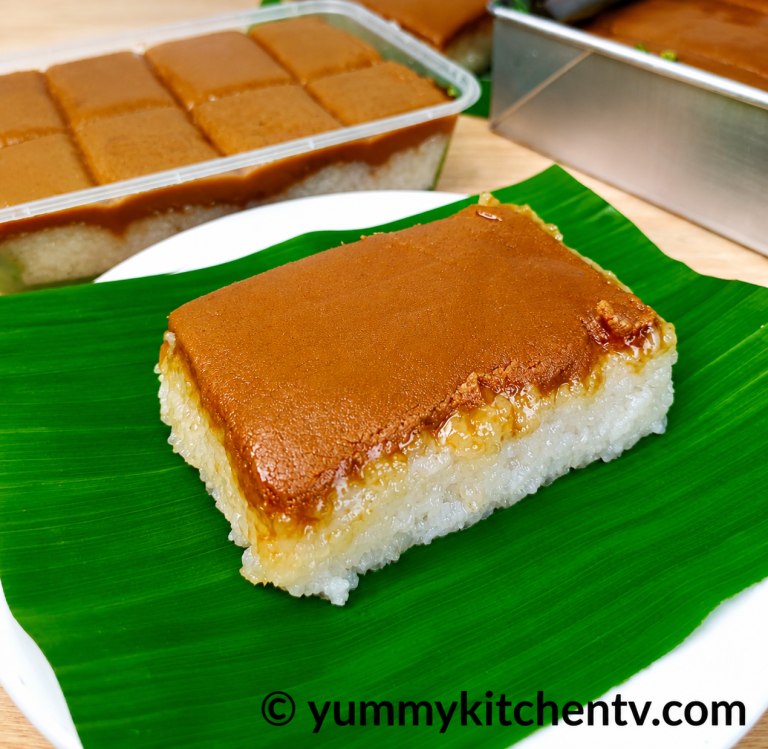
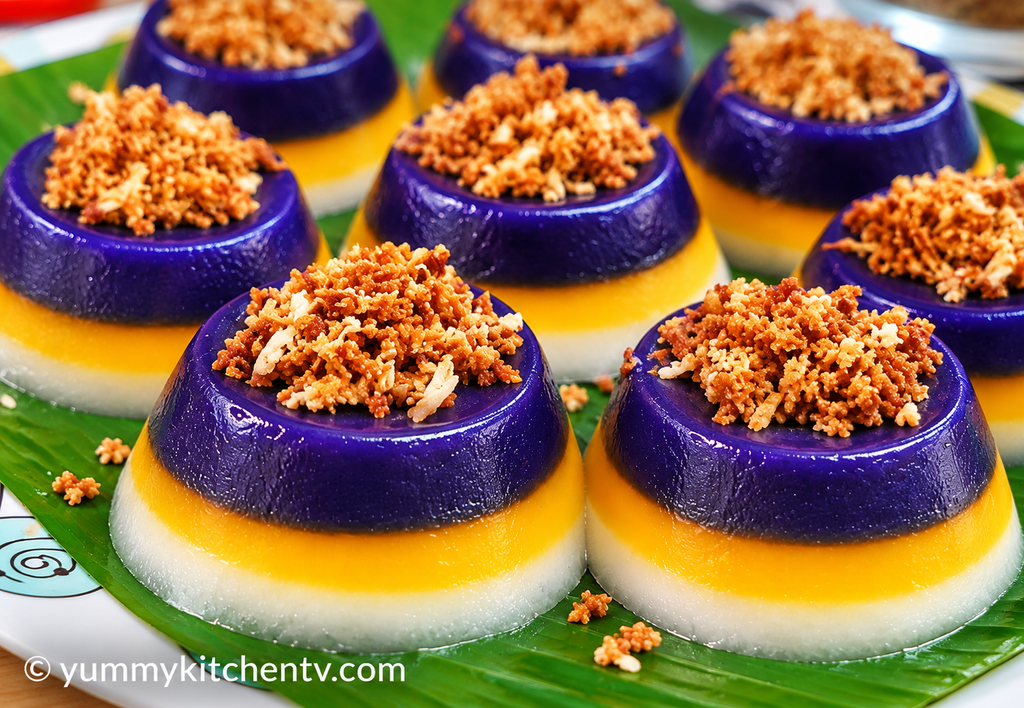
Sapin-sapin is one of the most colorful Filipino kakanin. This steamed layered rice cake is made with glutinous rice flour, rice flour, coconut milk, condensed milk, and sugar. Its soft, chewy texture and beautiful purple, yellow, and white layers make it a favorite for Christmas, fiestas, birthdays, potlucks, and family gatherings.


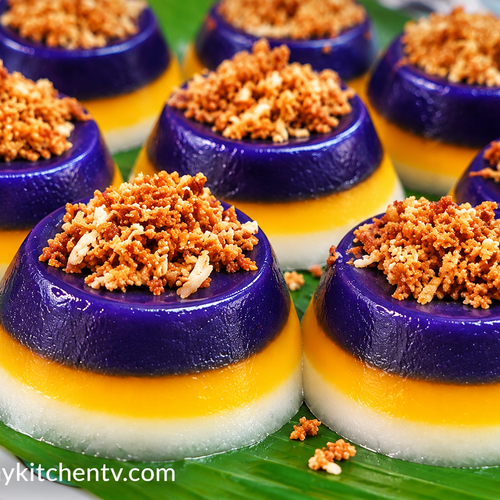
Sapin-Sapin – Filipino Layered Rice Cake
Equipment
- Large mixing bowl
- Fine mesh strainer
- 3 small bowls
- Mini molds or cake pan
- Steamer with lid
- Clean cloth
- Measuring cups and spoons
- Squeeze bottle, measuring cup, or small ladle
- Spatula or spoon
- Serving plate
Ingredients
For the Budbod Topping:
- 1 cup desiccated coconut
- 2 tablespoons white sugar
For the Sapin-Sapin:
- 2 cups glutinous rice flour
- 1 cup rice flour
- 1/2 cup white sugar
- 2 1/2 cups coconut milk
- 1 cup condensed milk
- 1 teaspoon purple food coloring or ube flavoring
- 1 teaspoon yellow food coloring or jackfruit flavoring
- Oil for greasing
- Banana leaves optional
Instructions
- Prepare the budbod. Place the desiccated coconut in a pan over low heat. Stir constantly until lightly browned and fragrant.
- Add the white sugar and continue cooking for a few minutes, stirring continuously, until the coconut becomes golden and lightly caramelized. Remove from heat and let cool completely.
- Make the batter. In a large bowl, combine the glutinous rice flour, rice flour, and white sugar. Mix well.
- Add the coconut milk and condensed milk. Stir until the mixture is smooth and well combined.
- Strain the batter through a fine-mesh strainer to remove lumps and create a smoother texture.
- Divide the batter into three equal portions and transfer each portion into a separate bowl.
- Add purple food coloring or ube flavoring to the first portion. Add yellow food coloring or jackfruit flavoring to the second portion. Leave the third portion white.
- Mix each portion thoroughly until the colors and flavors are evenly distributed. Let the batter rest for about 30 minutes.
- Prepare the steamer. Bring the water in the steamer to a boil. Lightly grease the mini molds with oil. You may also use banana leaves.
- Wrap a clean cloth around the underside of the steamer lid to prevent condensation from dripping onto the sapin-sapin.
- Steam the first layer. Pour about 1–2 tablespoons of the purple batter into each mold, making sure the amount is even. Steam over medium heat for about 8 minutes.
- Check the first layer with a toothpick. It should be set before adding the next layer.
- Add the second layer. Carefully pour an equal amount of yellow batter over the cooked purple layer. A squeeze bottle, measuring cup, or small ladle can make this easier.
- Cover and steam over medium heat for about 10 minutes.
- Add the final layer. Pour the white batter evenly over the yellow layer. Cover and steam for about 15 minutes, or until completely cooked.
- For a larger mold or cake pan, increase the steaming time as needed. Check the center with a toothpick to ensure the sapin-sapin is fully cooked.
- Cool completely. Remove from the steamer and allow the sapin-sapin to cool completely before unmolding.
- Lightly grease a serving plate or place a banana leaf on it. Carefully unmold the sapin-sapin.
- Sprinkle the toasted coconut budbod over the top. You may also use latik as a topping. Serve and enjoy.
Notes
- Strain the batter before steaming to remove lumps and achieve smooth, clean layers.
- Keep the steaming water at a steady boil and cook over medium heat for even results.
- Make sure each layer is set before adding the next layer to prevent the colors from mixing.
- A squeeze bottle makes it easier to portion the batter neatly into mini molds.
- For traditional flavor, use ube flavoring or ube halaya for the purple layer and jackfruit flavoring for the yellow layer.
- Food coloring can be used when you want colorful layers without adding additional flavors.
- Allow the sapin-sapin to cool completely before unmolding to prevent it from breaking.
- You may use latik instead of toasted coconut budbod for a richer topping.
- If using a large cake pan instead of mini molds, the layers will be thicker and may require additional steaming time.
Nutrition
This easy sapin-sapin recipe uses mini molds, making it simple to create neat individual portions. Each layer is steamed separately, then finished with sweet toasted coconut, also called budbod. You can keep the layers simply colored, or add classic flavors such as ube and jackfruit for a more traditional taste.

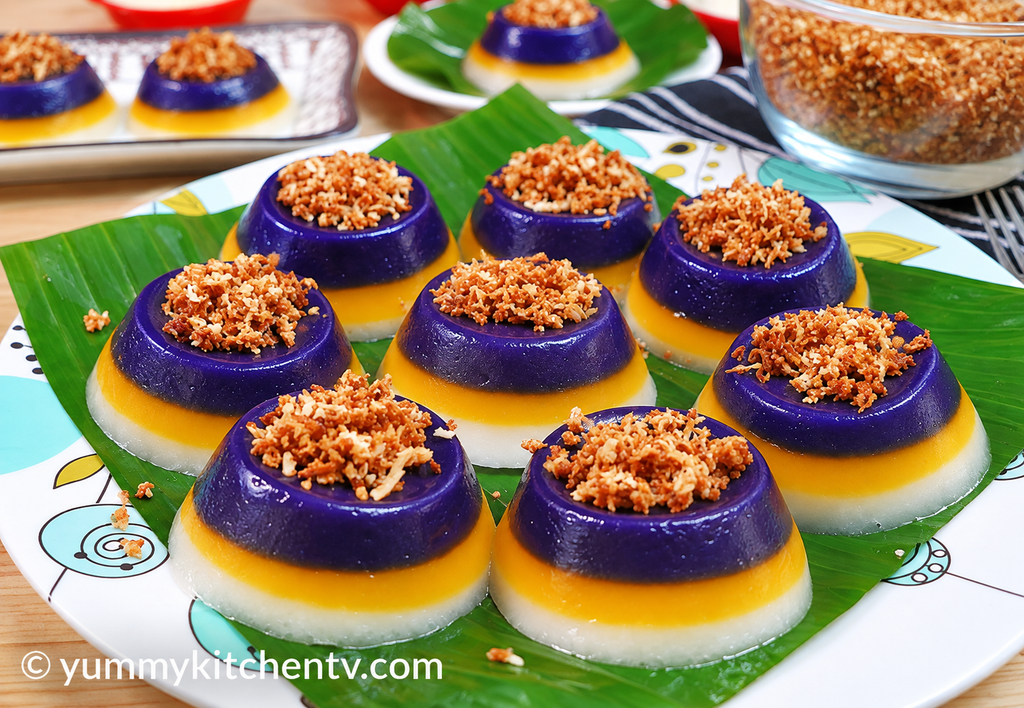
What Is Sapin-Sapin?

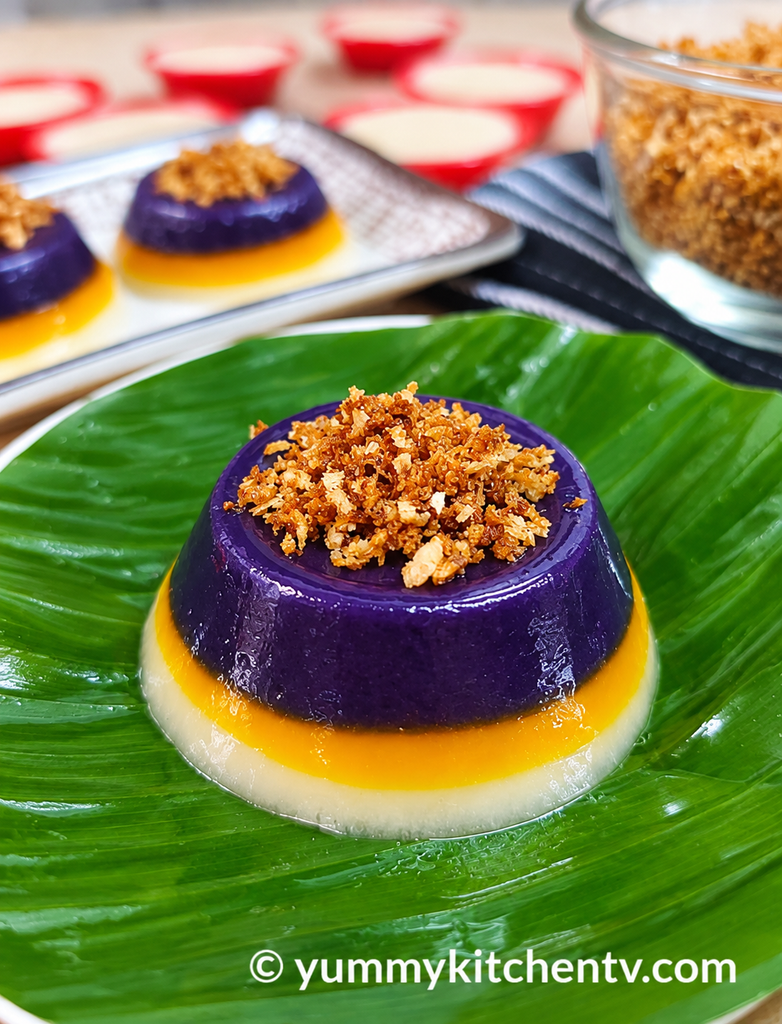
Sapin-sapin is a traditional Filipino layered rice cake or kakanin. The name comes from “sapin,” which refers to sheets or layers, describing the dessert’s most recognizable feature.
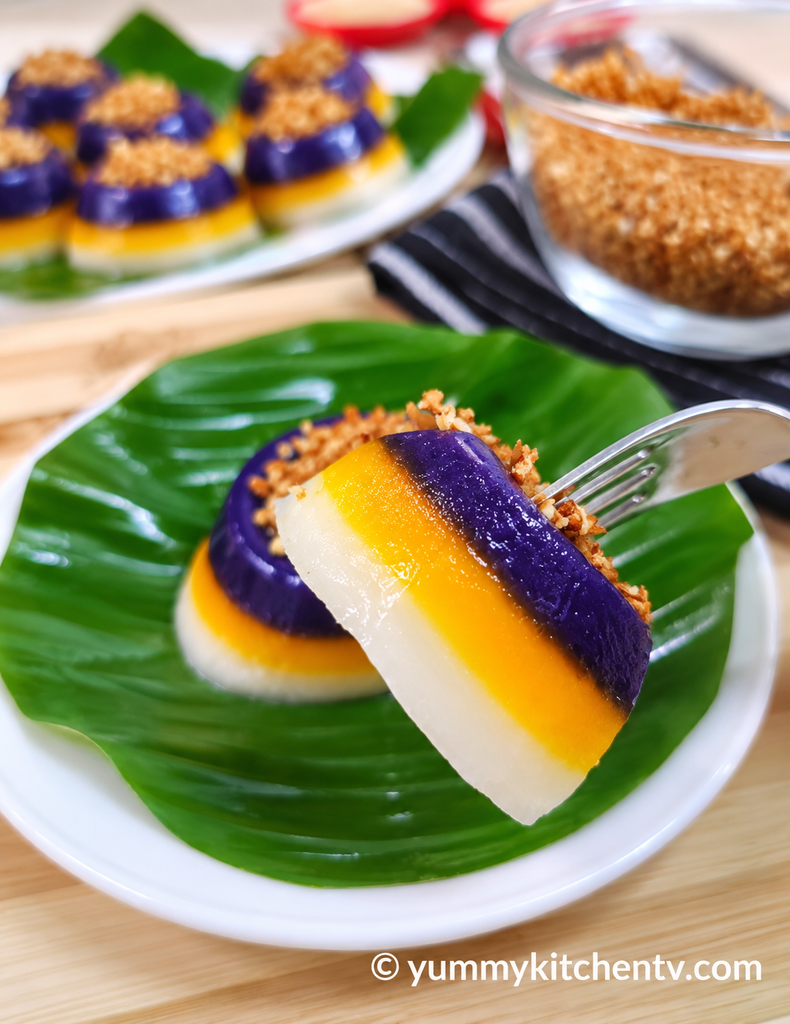
Traditional versions often combine different flavors in each layer. The purple layer may contain ube halaya or ube flavoring, while the yellow or orange layer can be flavored with jackfruit. The white layer is usually plain, allowing the coconut flavor to shine.
Although especially popular during holidays and celebrations, sapin-sapin can be enjoyed throughout the year. It is soft, chewy, mildly sweet, and wonderfully fragrant from the coconut milk. The colorful layers also make it a beautiful addition to a Filipino dessert table.
Why You’ll Love This Recipe
This recipe uses simple ingredients and an easy steaming method. The batter only needs to be mixed, strained, divided, colored or flavored, and steamed layer by layer.
Using mini molds makes portioning easier and helps create even layers. It is also convenient when serving guests because each piece can be unmolded individually.
The toasted coconut topping adds a pleasant contrast to the soft rice cake. As the coconut and sugar brown together, they develop a lightly caramelized flavor that pairs beautifully with the creamy, chewy sapin-sapin.

Ingredients
For the Budbod Topping
- 1 cup desiccated coconut
- 2 tablespoons white sugar
For the Sapin-Sapin
- 2 cups glutinous rice flour
- 1 cup rice flour
- 1/2 cup white sugar
- 2 1/2 cups coconut milk
- 1 cup condensed milk
- Food coloring or flavoring, as desired
- Oil, for greasing
- Banana leaves, optional
For a classic combination, use purple or ube flavoring for the first layer, yellow or jackfruit flavoring for the second, and leave the final layer white.
How to Make Sapin-Sapin
1. Prepare the Budbod
Place the desiccated coconut in a dry pan over low heat. Stir constantly until lightly browned and fragrant. Add the white sugar and continue cooking for a few minutes, stirring continuously until the coconut becomes golden and lightly caramelized.
Remove from the heat and let it cool completely. Keep it aside for topping later. Watch the coconut carefully because it can burn quickly once it starts browning.
2. Prepare the Batter
In a large bowl, combine the glutinous rice flour, rice flour, and white sugar. Mix well.
Add the coconut milk and stir until smooth. Pour in the condensed milk and continue mixing until everything is well combined.
Strain the mixture through a fine sieve into another clean bowl. This removes lumps and helps create the smooth texture expected from sapin-sapin.
Divide the batter into three equal portions. You can divide it into more portions if you want additional layers.
3. Color and Flavor
Color or flavor each portion according to your preference. For the familiar three-layer version, make one portion purple, one yellow, and leave one white.
Ube flavoring can be added to the purple layer, while jackfruit flavoring works well with the yellow layer. If you prefer a simpler version, food coloring alone can be used.
Mix each portion thoroughly so the color is even. Let the batter rest for about 30 minutes before steaming. This helps the mixture settle and can contribute to a smoother texture.
4. Prepare the Steamer and Molds
While the batter rests, prepare the steamer. Bring the water to a boil before cooking the sapin-sapin.
Lightly grease each mold with oil so the cooked rice cake will release easily. Banana leaves can also be used if desired.
Wrap a clean cloth around the underside of the steamer lid to catch condensation. This helps prevent water droplets from falling directly onto the sapin-sapin and damaging the smooth surface.
5. Steam the First Layer
Pour about 1 to 2 tablespoons of the purple batter into each mini mold, depending on the mold size. Divide the mixture as evenly as possible.
Place the molds in the steamer and cover. Steam over medium heat for about 8 minutes.
Test the first layer with a toothpick. It should be set and the toothpick should come out clean or with very little moisture. Larger molds require more time because the layer is thicker.
6. Add the Second Layer
Once the first layer has set, carefully add an equal amount of yellow batter on top. A squeeze bottle is convenient for small molds, but a measuring cup, spoon, or small ladle also works.
Pour gently so the new batter does not disturb the cooked layer underneath.
Cover and steam the second layer over medium heat for about 10 minutes.
7. Add the Final Layer
Add the white batter evenly over the cooked yellow layer. Cover and steam for about 15 minutes over medium heat.
Check the center with a toothpick. When it comes out clean and the top looks firm, the sapin-sapin is ready.
If using a large cake pan or deeper container, increase the steaming time as needed. Cooking time depends on the thickness and size of the mold.
8. Cool and Unmold
Remove the cooked sapin-sapin from the steamer and let it cool completely. Cooling allows the rice cake to firm up, making it much easier to unmold without breaking.
Lightly grease a serving plate or place a banana leaf on it. Carefully unmold each piece and arrange them on the plate.
Sprinkle the toasted coconut budbod over the top. You may also use latik for a richer, more traditional topping.
Tips for Perfect Sapin-Sapin
Strain the batter carefully. Removing lumps gives the finished rice cake a smoother texture and cleaner-looking layers.
Keep the steamer at a steady medium heat. Very strong boiling can create excess condensation, while weak heat may result in uneven cooking.
Measure each layer consistently. Equal amounts create attractive, well-defined stripes.
Do not unmold the sapin-sapin while it is hot. It is naturally soft after steaming and becomes easier to handle once completely cooled.
For more traditional flavor, use ube and jackfruit flavoring rather than food coloring alone. You can also adjust the sweetness according to your preference.
If the top becomes wet from condensation, gently blot excess moisture with a clean paper towel after cooking rather than disturbing the layers.

How to Make Rice Flour at Home
If ready-made rice flour is unavailable, you can make it from raw rice. Rinse the rice well and soak it in cold water for 3 to 6 hours. Drain thoroughly, then spread the rice on paper towels and allow it to dry until slightly damp.
Grind the rice in a blender or food processor, starting with short pulses until it becomes a fine powder. Transfer the ground rice to a skillet and cook over medium heat, stirring constantly, until the moisture has evaporated. Do not let the flour brown.
Cool the flour completely, then sift it. Return coarse pieces to the blender and process again if necessary.
Storage
Let leftover sapin-sapin cool completely before placing it in an airtight container. Refrigerate promptly and enjoy within a few days for the best quality.
Chilled sapin-sapin becomes firmer. Let it sit briefly at room temperature before serving if you prefer a softer, chewier texture.
Conclusion
Sapin-sapin is a colorful Filipino dessert that turns rice flour and coconut ingredients into a festive homemade treat. Its soft, chewy layers, creamy coconut flavor, and sweet toasted coconut topping make it perfect for celebrations, merienda, and family gatherings.
This mini sapin-sapin recipe makes the process more approachable because individual molds help create even portions and attractive layers. Whether you use classic ube and jackfruit flavors or simply add different colors, you can make a Filipino kakanin at home with a little patience and careful steaming.