Bibingkoy Recipe: How to Make the Famous Caviteño Kakanin Without an Oven
If you love Filipino kakanin, Bibingkoy is one dessert you should definitely try. This special Caviteño rice cake combines soft, chewy glutinous rice dough with a sweet red mung bean filling and a rich coconut sauce. Add chewy sago, and optionally jackfruit or kaong, and you get a dessert that is creamy, sticky, sweet, and wonderfully satisfying.


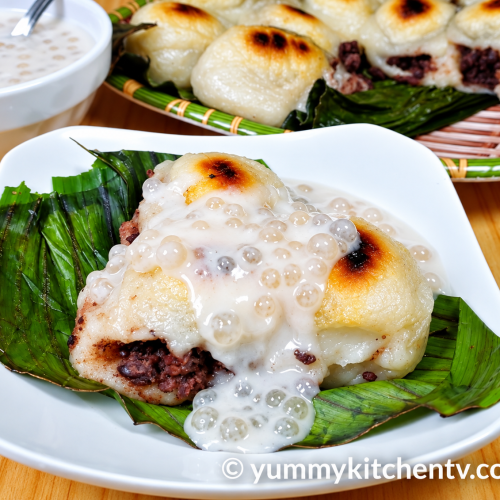
Bibingkoy – Filipino Caviteño Rice Cake with Mung Bean Filling
Equipment
- Serving plate
- Large mixing bowls
- Cooking pot
- Saucepan
- Wide pan with lid
- Wooden spoon or spatula
- Potato masher or Fork
- Measuring cups and spoons
- Clean banana leaves
Ingredients
For the Mung Bean Filling
- 200 grams red mung beans
- 3 cups water for cooking
- 4 tablespoons white sugar
For the Bibingkoy Dough
- 3 cups glutinous rice flour
- 1 ½ cups water
- Oil for greasing
- Banana leaves for lining and covering
For the Coconut Topping
- 1 ½ cups coconut milk
- 4 tablespoons white sugar
- 1 tablespoon glutinous rice flour
- ½ cup cooked sago or tapioca pearls
Optional Toppings
- Jackfruit strips
- Kaong or sugar palm
Instructions
Prepare the Mung Bean Filling
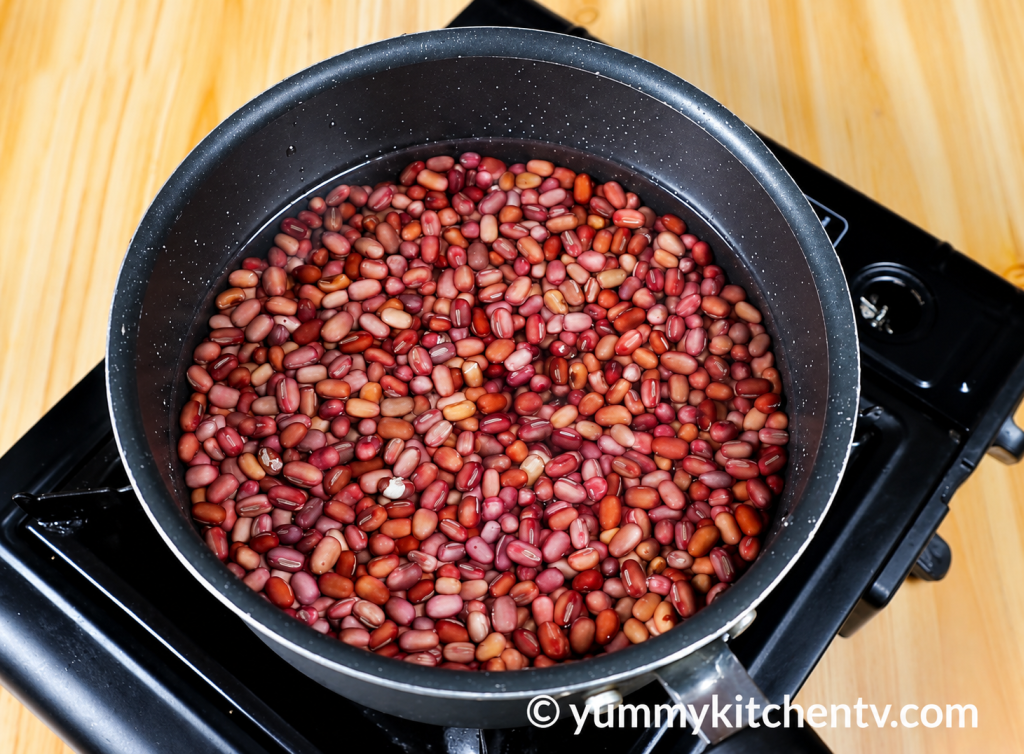
- Soak the red mung beans in water for about 8 hours or overnight.
- Drain the soaked beans and transfer them to a pot.
- Add 3 cups of fresh water. Cover and cook until the mung beans are tender and the water has completely evaporated.
- Turn off the heat and mash the cooked mung beans.
- Add the white sugar and continue mashing until well combined.
- Transfer the sweetened mung bean mixture to a bowl and let it cool until easy to handle.
- Scoop portions of the mung bean mixture and roll them into small balls. Set aside.
Prepare the Dough
- Place the glutinous rice flour in a large mixing bowl.
- Add 1 ½ cups water and mix until a soft dough forms.
- Take a portion of dough and roll it into a ball, then flatten it gently.
- Place one sweetened mung bean ball in the center.
- Carefully seal the dough around the filling and roll it into a smooth ball.
- Repeat with the remaining dough and filling.
Cook the Bibingkoy
- Line a wide pan with clean banana leaves.
- Lightly brush the banana leaves with oil to prevent sticking.
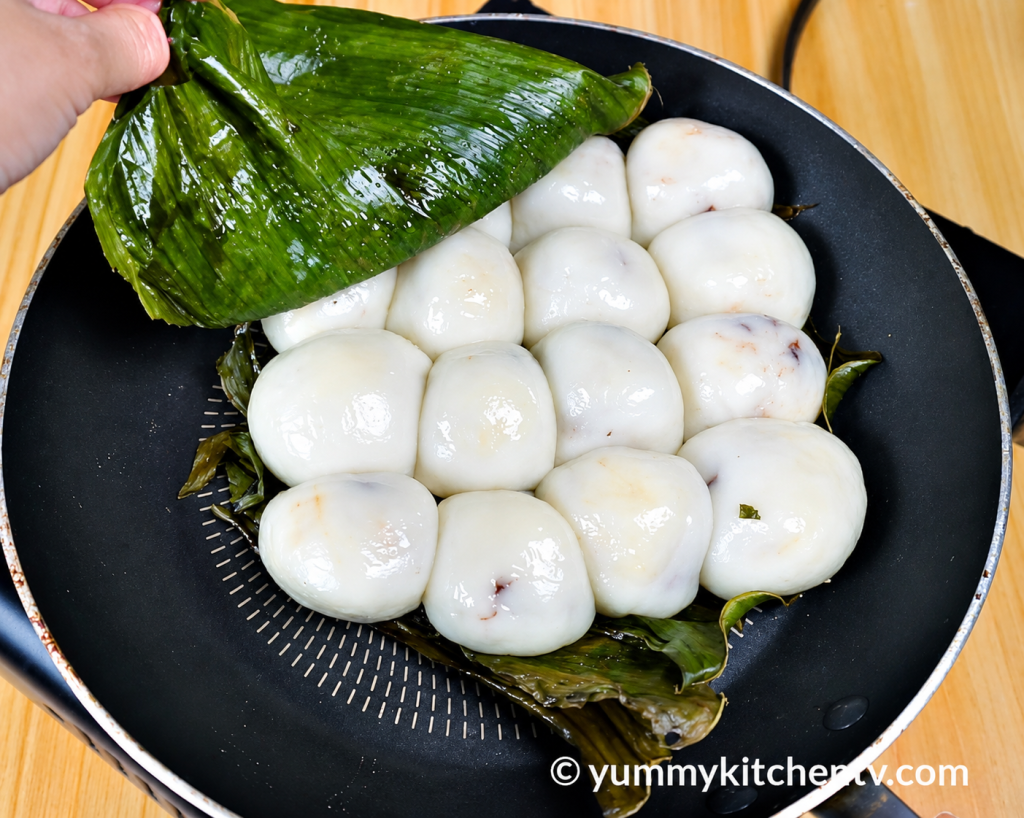
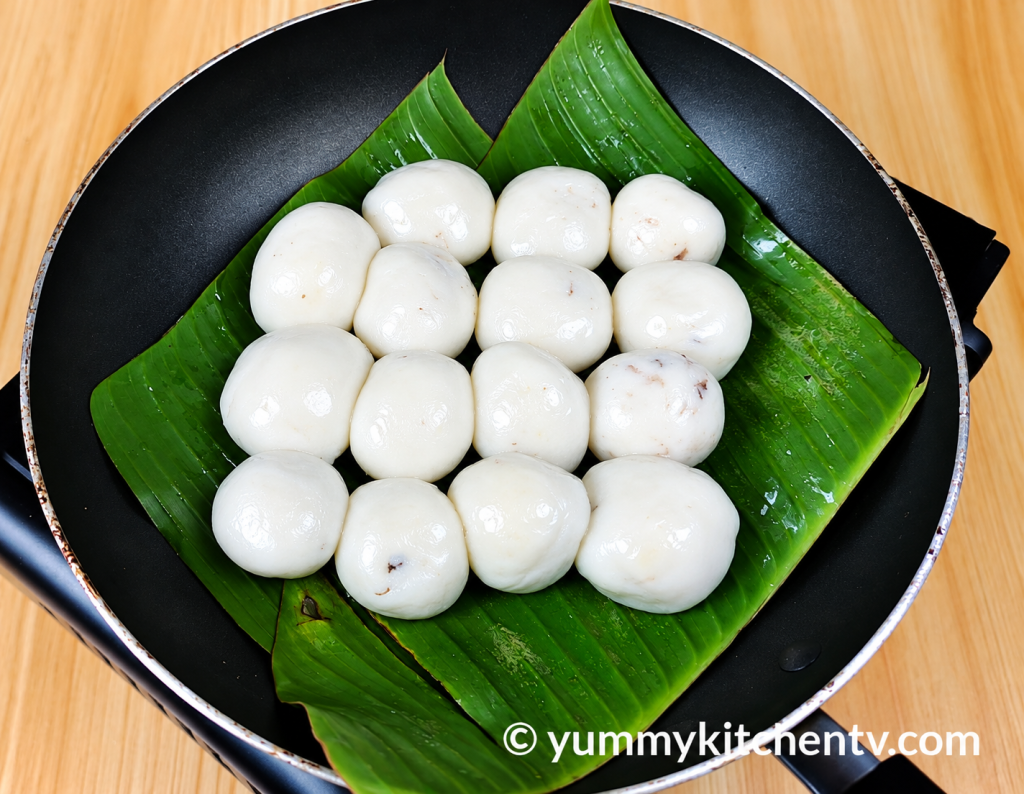
- Arrange the filled dough balls on the banana leaves.
- Cover the Bibingkoy with another lightly oiled banana leaf.
- Cover the pan with a lid and cook over low heat for about 20 minutes, or until the rice dough is fully cooked.
- Carefully transfer the cooked Bibingkoy, together with the banana leaves, to a serving plate.
Prepare the Coconut Topping
- In a saucepan, combine the coconut milk and cooked sago.
- Add the white sugar and stir well.
- Add the glutinous rice flour and mix until smooth.
- Simmer over low heat while stirring continuously for about 10 minutes.
- When the coconut mixture becomes thick and smooth, turn off the heat.
- Transfer the coconut topping to a bowl.
Assemble and Serve
- Remove the banana leaves from the Bibingkoy.
- Slice the Bibingkoy into portions and place on serving plates.
- Spoon the sweetened coconut and sago topping generously over the rice cake.
- Add jackfruit strips or kaong if desired.
- Serve and enjoy.
Notes
- Soaking the mung beans overnight helps them cook faster and become tender.
- Let the sweetened mung bean filling cool before shaping it into balls.
- Seal the glutinous rice dough completely around the filling to prevent the mung bean paste from escaping during cooking.
- Lightly oil the banana leaves to keep the Bibingkoy from sticking.
- Keep the heat low while cooking so the rice cakes cook evenly without scorching.
- Stir the coconut topping continuously while it thickens to keep it smooth and lump-free.
- Jackfruit and kaong are optional but add extra sweetness and texture to the finished Bibingkoy.
Nutrition
Unlike traditional bibingka, Bibingkoy is not baked in the same way. This version is cooked in a pan, making it a practical recipe for home cooks who do not have an oven. It may look impressive when served, but the process is actually simple once you divide it into three parts: the mung bean filling, the glutinous rice dough, and the coconut topping.
Whether you are familiar with this Caviteño favorite or discovering it for the first time, this homemade Bibingkoy recipe is a delicious way to enjoy a lesser-known Filipino kakanin at home.

What Is Bibingkoy?

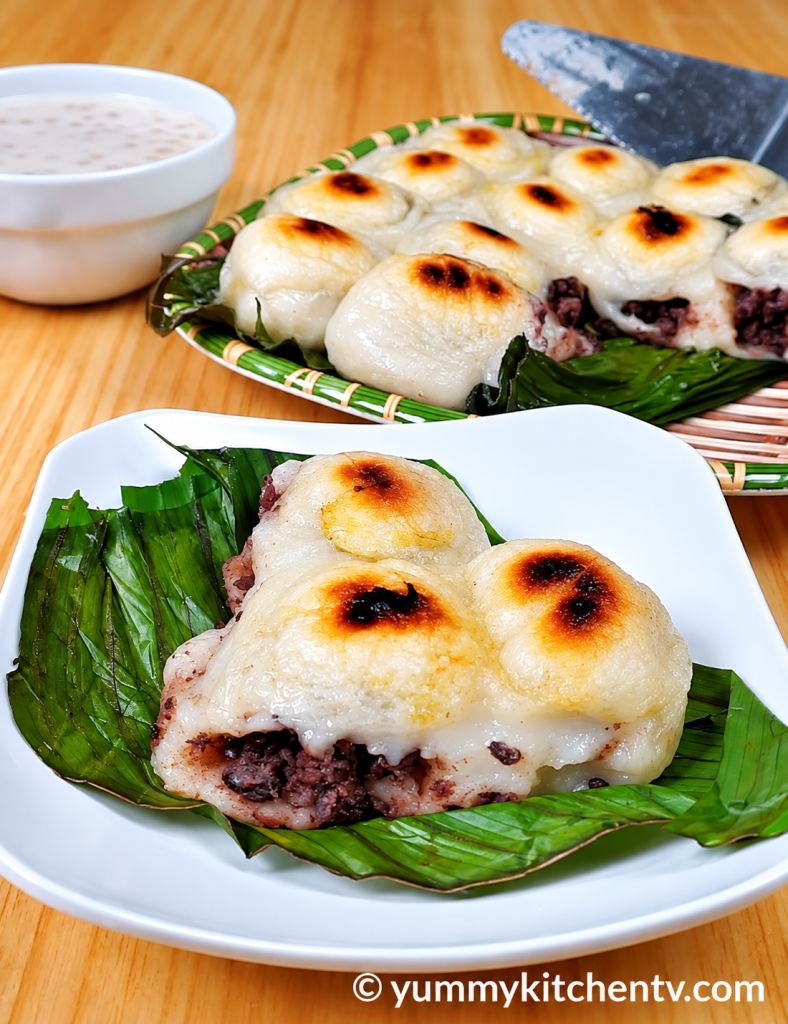
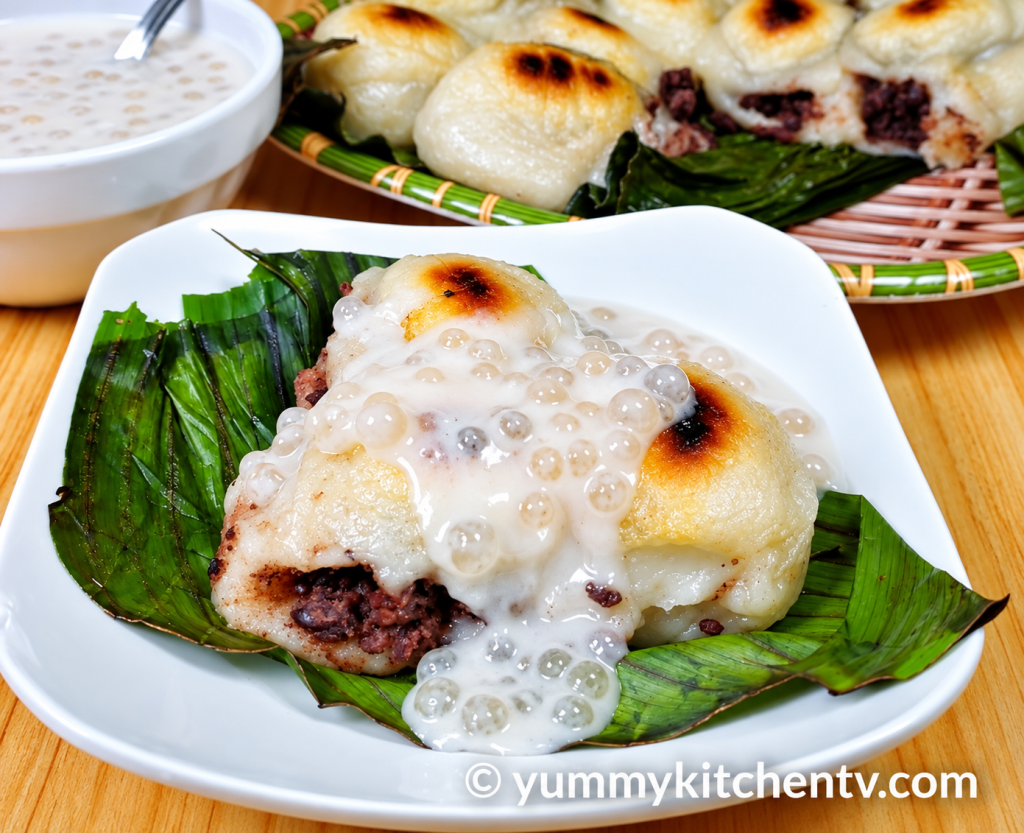
Bibingkoy is a Filipino rice cake associated with Cavite. It is made from glutinous rice flour and filled with sweetened mung beans, then served with a creamy coconut sauce containing sago or tapioca pearls. Optional additions such as jackfruit strips and kaong add more texture and sweetness.
Its combination of chewy rice cake, sweet bean filling, coconut milk, and tapioca makes it especially distinctive. It shares similarities with several Filipino and Asian rice-based treats, but the complete combination gives Bibingkoy its own character.
Traditional versions may be prepared using an oven or pugon, while this recipe uses a covered pan for a convenient no-oven method.
Why You’ll Love This Recipe
There are plenty of reasons to make homemade Bibingkoy. First, you do not need an oven. A covered pan and banana leaves are enough to cook the filled rice cakes gently.
The filling is also simple. Mung beans become soft after soaking and cooking, then are mashed with sugar into a naturally nutty and sweet paste. Once cooled, the filling is easy to shape and place inside the dough.
The coconut topping is another highlight. It turns simple rice cakes into a rich dessert and pairs beautifully with the chewy center. Sago adds little bursts of chewiness, while jackfruit or kaong can make the topping even more festive.
Most importantly, this recipe is a wonderful way to explore Filipino regional cuisine. If your family enjoys kakanin, Bibingkoy makes a memorable merienda or dessert for gatherings and special occasions.

Ingredients
For the Mung Bean Filling
- 200 grams red mung beans
- 3 cups water, for cooking
- 4 tablespoons white sugar
For the Dough
- 3 cups glutinous rice flour
- 1 ½ cups water
- Oil, for greasing
- Banana leaves, for lining and covering
For the Coconut Topping
- 1 ½ cups coconut milk
- 4 tablespoons white sugar
- 1 tablespoon glutinous rice flour
- ½ cup cooked sago or tapioca pearls
Optional Toppings
- Jackfruit strips
- Kaong or sugar palm
How to Make Bibingkoy
1. Prepare the Mung Bean Filling
Start with the filling because it needs time to cool before you can shape it.
Place the mung beans in a bowl and cover them with water. Soak for about eight hours or overnight. Soaking softens the beans and helps shorten the cooking time.
After soaking, drain the beans and transfer them to a pot. Add three cups of fresh water, cover, and cook until the beans become tender and the water has evaporated.
Turn off the heat and mash the cooked mung beans while they are still warm. Add the white sugar and continue mixing until the sugar is evenly incorporated and you have a soft, sweet paste.
Transfer the mixture to a bowl and allow it to cool enough to handle. Scoop portions of the sweetened mung bean paste and roll each portion into a small ball. Set the filling balls aside.

2. Make the Glutinous Rice Dough
Place the glutinous rice flour in a large bowl. Gradually add 1 ½ cups water while mixing.
Knead or mix the flour and water until a soft dough forms. The dough should be moist enough to hold together but firm enough to shape.
Take a portion of dough and roll it into a ball. Flatten it gently in your palm, creating enough space in the center for the mung bean filling.
Place one mung bean ball in the middle. Carefully bring the edges of the dough together and seal the filling completely. Roll it gently between your palms until you have a smooth ball.
Repeat until all the dough and filling have been used.
3. Cook the Bibingkoy in a Pan
Prepare a wide pan with a lid. Line the bottom with clean banana leaves and brush the leaves lightly with oil. The oil helps prevent the glutinous dough from sticking.
Arrange the filled dough balls on the banana leaves, leaving a little space between them. Cover the balls with another banana leaf that has also been lightly brushed with oil.
Cover the pan with its lid and cook over low heat for about 20 minutes, or until the rice dough is cooked through and firm.
Because cooking times can vary depending on the pan and heat level, check the texture before removing the pan from the stove. The dough should look cooked and feel firm rather than raw or powdery.
Once cooked, carefully transfer the Bibingkoy and banana leaves to a serving plate. Keep the banana leaves underneath until you are ready to serve.

How to Make the Coconut Topping
While the Bibingkoy cooks, prepare the creamy coconut sauce.
In a saucepan, combine the coconut milk and cooked sago. Add the white sugar and stir until combined.
Add the glutinous rice flour and mix thoroughly. Place the saucepan over low heat and continue stirring as the mixture simmers.
Cook for about 10 minutes, stirring frequently. The flour will gradually thicken the coconut milk, creating a smooth, creamy sauce. Do not leave it unattended because the mixture can stick to the bottom as it thickens.
When the sauce reaches a thick but pourable consistency, turn off the heat and transfer it to a bowl.
How to Serve Bibingkoy
When you are ready to serve, carefully remove the banana leaves. Slice one or two Bibingkoy pieces and place them on a small serving plate.
Spoon the warm or slightly cooled coconut sauce generously over the top. Make sure some of the chewy sago reaches each serving.
For an extra-special presentation, add strips of jackfruit or a few pieces of kaong. Their fruity sweetness works beautifully with the rich coconut sauce and sweet mung bean center.
Bibingkoy can be served as a Filipino merienda, dessert, or special kakanin for celebrations. It is particularly enjoyable while the coconut topping is still warm.
Tips for Making Bibingkoy
Soaking the mung beans overnight is helpful because it softens them and makes them easier to cook and mash. If your beans are already very soft after soaking, keep an eye on them while cooking so they do not dry out too quickly.
Allow the mung bean filling to cool before shaping it. Warm filling can make the dough harder to handle.
When sealing the dough, make sure there are no openings. A well-sealed Bibingkoy keeps the filling inside while it cooks.
Use only a light coating of oil on the banana leaves. Too much oil can make the dough greasy.
Clean the banana leaves thoroughly before using them. If they are difficult to handle, briefly warming them can make them more flexible.
Keep the heat low while cooking the Bibingkoy. Gentle heat helps the glutinous dough cook evenly without scorching the banana leaves.
For the coconut sauce, stir continuously or frequently as it thickens. This prevents the flour from forming lumps and keeps the sauce smooth.
Conclusion
Bibingkoy is a delicious example of how creative Filipino kakanin can be. With its chewy glutinous rice exterior, sweet mung bean filling, creamy coconut sauce, and chewy sago, every bite offers several textures and layers of flavor.
This Caviteño Bibingkoy recipe makes the traditional treat more accessible by using a covered pan instead of requiring an oven or pugon. The three-part preparation may take a little time, but each step is straightforward and uses familiar ingredients.
Make a batch for merienda, family gatherings, or whenever you want to try something beyond the usual Filipino rice cakes. Once you taste the sweet bean center with the creamy coconut topping, you may understand why this regional kakanin deserves a special place on the Filipino dessert table.