No-Bake Bibingkang Malagkit Recipe (Filipino Sweet Sticky Rice Cake with Latik Topping)
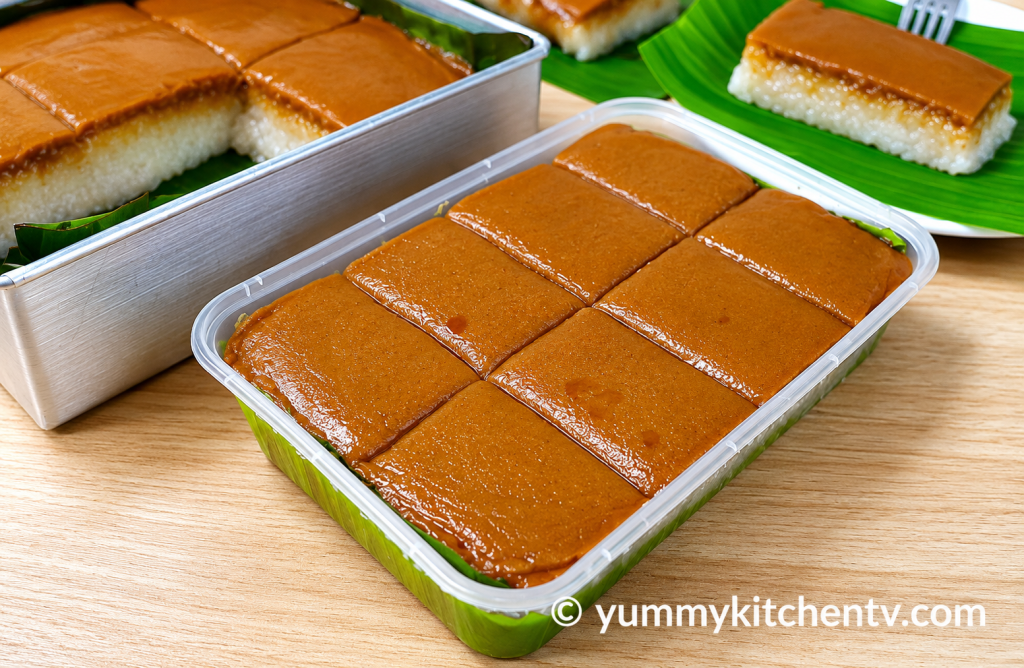
If you’re looking for a classic Filipino kakanin that’s rich, chewy, creamy, and incredibly satisfying, Bibingkang Malagkit deserves a spot on your table. This beloved Filipino sweet sticky rice cake is made with glutinous rice cooked in creamy coconut milk, then topped with a thick layer of sweet caramelized latik made from coconut milk and brown sugar. Every bite is soft, sticky, sweet, and packed with coconut flavor, making it a favorite during holidays, fiestas, family gatherings, and even ordinary afternoons when you’re craving something special.


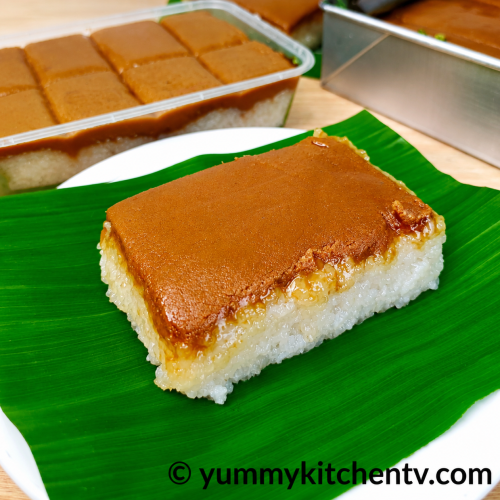
No-Bake Bibingkang Malagkit
Equipment
- Rice cooker or cooking pot
- Large non-stick pan
- Medium saucepan
- Mixing spoon or wooden spatula
- Measuring cups and spoons
- Serving tray or rectangular baking dish (8×8 or 9×9-inch)
- Banana leaves (optional)
- Silicone or offset spatula
Ingredients
For the Sticky Rice
- ½ kilo glutinous rice malagkit rice
- 3 cups water
- 2 cups coconut milk
- 1 cup white sugar
- ½ teaspoon salt
For the Latik Topping
- 1½ cups coconut milk
- 1½ cups dark brown sugar
- ½ teaspoon salt
Instructions
- Wash the glutinous rice thoroughly until the water runs mostly clear. Drain well.
- Cook the rice with 3 cups of water using a rice cooker or pot until fully cooked.
- In a large pan, combine the coconut milk and white sugar. Cook over medium heat, stirring until the sugar dissolves.
- Simmer until the coconut mixture thickens slightly.
- Add the cooked glutinous rice and salt. Mix until every grain is coated.
- Continue cooking while stirring occasionally until the mixture becomes thick, sticky, and most of the liquid has evaporated.
- Transfer the sticky rice mixture to a banana leaf-lined or lightly greased serving tray. Spread evenly using a lightly greased spatula.
- In another pan, cook the coconut milk over low heat.
- Add the dark brown sugar and stir continuously until dissolved.
- Continue cooking until the mixture thickens into a glossy caramel-like latik. Stir in the salt.
- Pour the hot latik evenly over the sticky rice.
- Smooth the topping with a lightly greased spatula.
- Allow to cool completely before slicing and serving.
Notes
- Fresh coconut milk gives the richest flavor, but canned coconut milk works just as well.
- Cook the latik topping over low heat to prevent the sugar from burning and to achieve a smooth, glossy consistency.
- Lightly grease your spatula before spreading both the sticky rice and the topping for easier handling.
- For a more authentic presentation, line the serving dish with fresh banana leaves.
- Let the Bibingkang Malagkit cool completely before slicing so the topping can set properly.
- Store leftovers in an airtight container in the refrigerator for up to 4 days. Warm slightly before serving if desired.
Nutrition
The traditional version is often baked after the topping is added, giving it a beautifully caramelized finish. But what if you don’t have an oven? The good news is—you don’t need one! This No-Bake Bibingkang Malagkit Recipe delivers the same delicious flavors and chewy texture without requiring any baking. It’s an easy, beginner-friendly version that’s perfect for anyone who wants to recreate this Filipino delicacy using simple kitchen equipment.
Whether you’re a longtime fan of Filipino rice cakes or trying Bibingkang Malagkit for the first time, this recipe is sure to become one of your favorites. It’s affordable, made with pantry-friendly ingredients, and surprisingly simple to prepare.
What Is Bibingkang Malagkit?

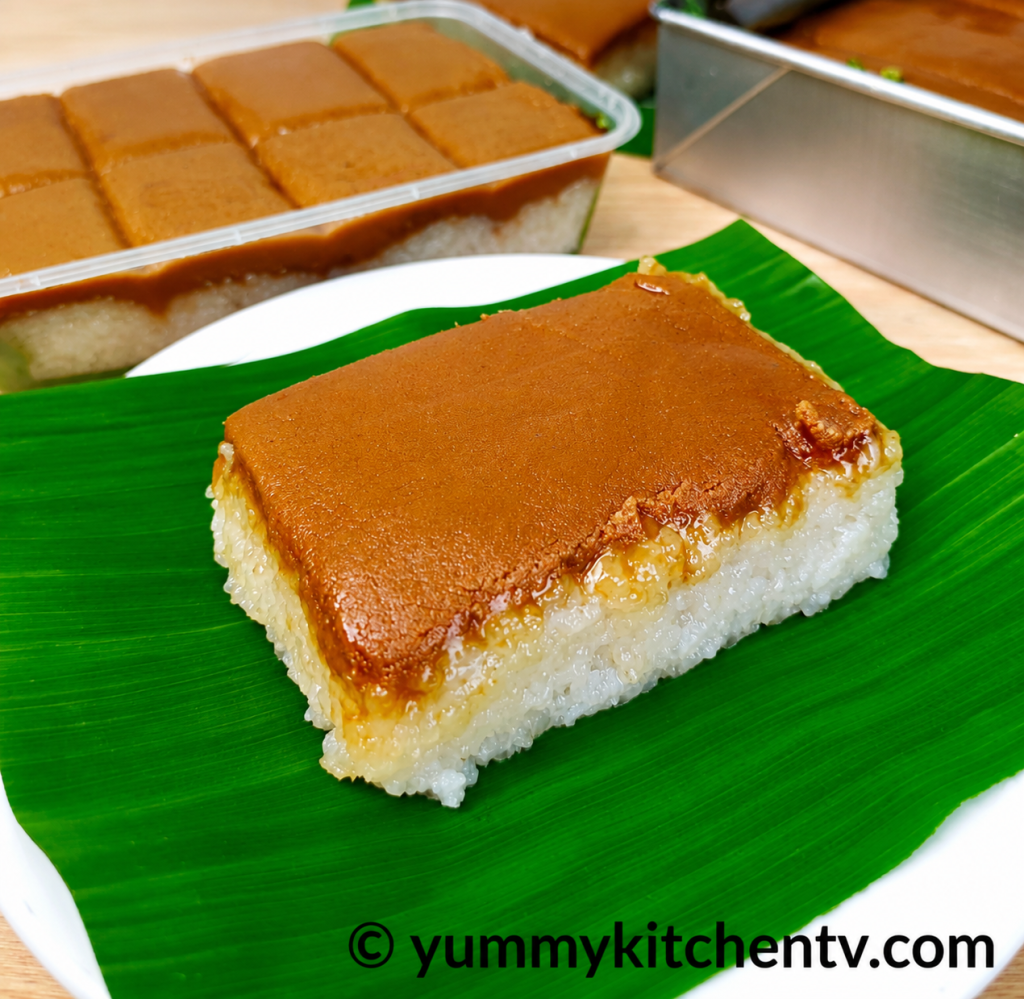
Bibingkang Malagkit is a traditional Filipino rice cake made primarily from glutinous rice (malagkit rice), coconut milk, sugar, and salt. Unlike the famous bibingka that’s baked from rice flour, this version uses cooked sticky rice, giving it a wonderfully chewy and satisfying texture.
The highlight of this delicacy is its luscious topping. A rich mixture of coconut milk and dark brown sugar is slowly cooked until thick, glossy, and caramel-like before being spread generously over the sticky rice. As it cools, the topping firms up into a sweet, sticky layer that perfectly complements the soft rice underneath.
Although baked versions remain popular, this no-bake Bibingkang Malagkit proves that you can achieve the same comforting flavors without turning on the oven. It’s an excellent recipe for busy families, beginner cooks, students, or anyone who simply wants an easier way to enjoy this classic dessert.
Because it’s naturally gluten-free (using glutinous rice, which contains no gluten despite its name), it’s also a wonderful option for many people with dietary restrictions.
Why You’ll Love This Recipe
There are so many reasons why this No-Bake Bibingkang Malagkit Recipe deserves a place in your recipe collection.
No oven needed. Everything cooks on the stovetop, making it ideal for homes without an oven.
Budget-friendly ingredients. You’ll only need glutinous rice, coconut milk, sugar, and a few pantry staples.
Perfectly chewy texture. The sticky rice absorbs the creamy coconut mixture, creating the signature soft yet chewy consistency everyone loves.
Rich coconut flavor. Coconut milk is used both in the rice and the topping, making every bite extra creamy and fragrant.
Perfect for celebrations. This dessert is always a crowd favorite during birthdays, fiestas, Christmas, New Year, potlucks, and family reunions.
Beginner-friendly recipe. Even if you’ve never made Filipino kakanin before, the steps are easy to follow.
Great for make-ahead desserts. It tastes even better after the topping has fully set, making it ideal for preparing in advance.
What Is Glutinous Rice?

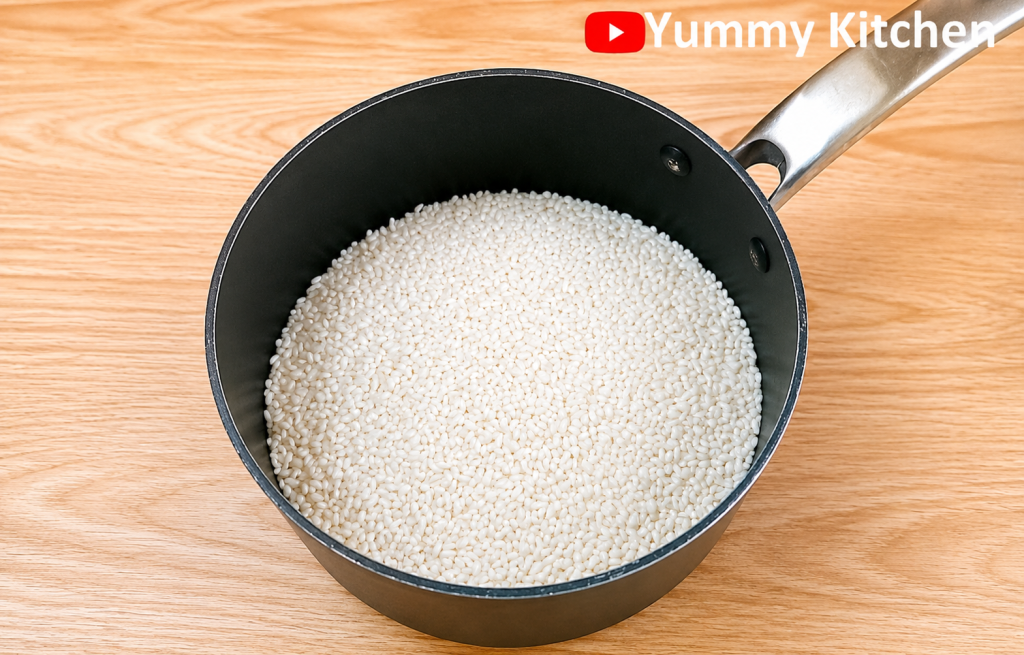
One ingredient that makes this recipe truly special is glutinous rice, also known as sticky rice or malagkit rice in the Philippines.
Despite its name, glutinous rice does not contain gluten. It gets its name from its sticky, glue-like texture once cooked. This unique consistency comes from its high starch content, making it the perfect ingredient for many Filipino delicacies like Biko, Suman, Palitaw, Mochi-inspired treats, and of course, Bibingkang Malagkit.
When cooked with coconut milk and sugar, glutinous rice becomes rich, creamy, and delightfully chewy, giving this dessert its signature texture.
You’ll usually find it in Asian supermarkets, Filipino grocery stores, or the international aisle of larger supermarkets.
Ingredients
One of the best things about this Bibingkang Malagkit Recipe is that it uses only a handful of affordable ingredients.
For the Sticky Rice
- ½ kilo glutinous rice (malagkit rice)
- 3 cups water
- 2 cups coconut milk
- 1 cup white sugar
- ½ teaspoon salt
For the Latik Topping
- 1½ cups coconut milk
- 1½ cups dark brown sugar
- ½ teaspoon salt
Step-by-Step Method
Step 1: Cook the Sticky Rice
Wash the glutinous rice thoroughly until the water becomes mostly clear. Drain well before placing it in your rice cooker or cooking pot.
Add three cups of water and cook just like regular rice. Once fully cooked, set it aside.

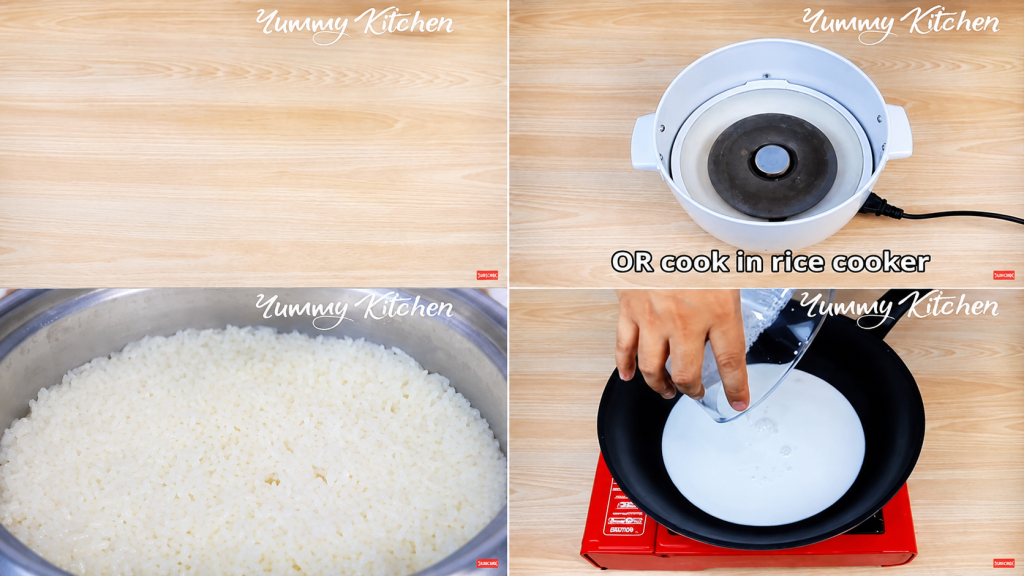
Step 2: Prepare the Coconut Mixture
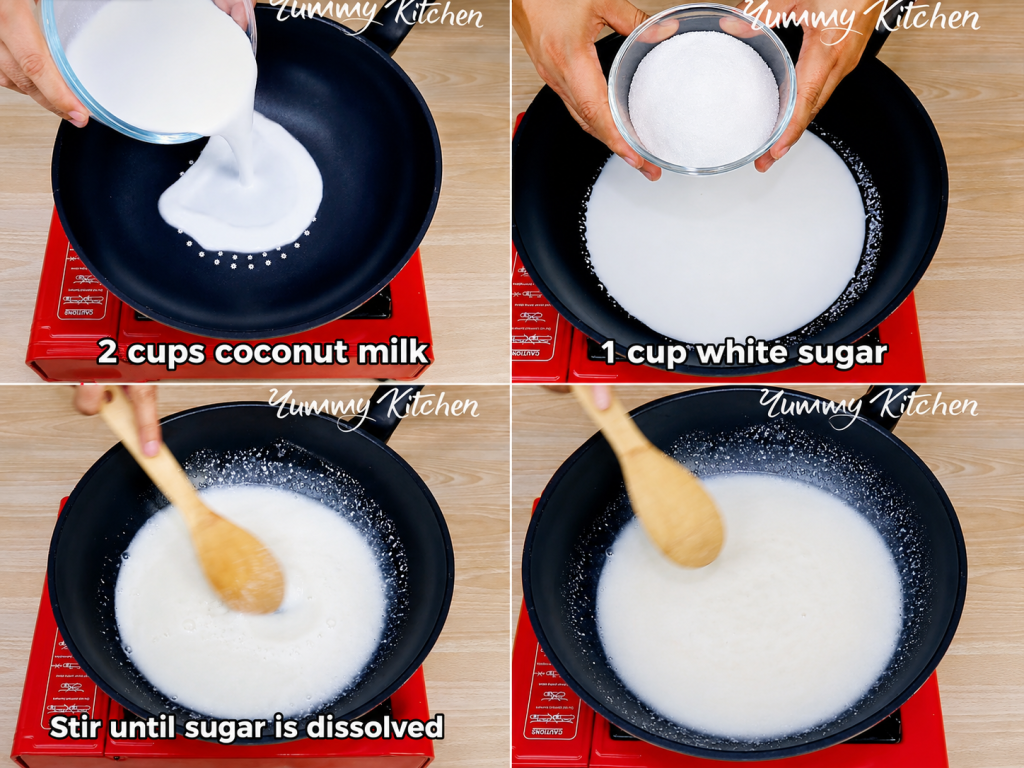
In a large pan, combine the coconut milk and white sugar.
Cook over medium heat while stirring until the sugar completely dissolves.
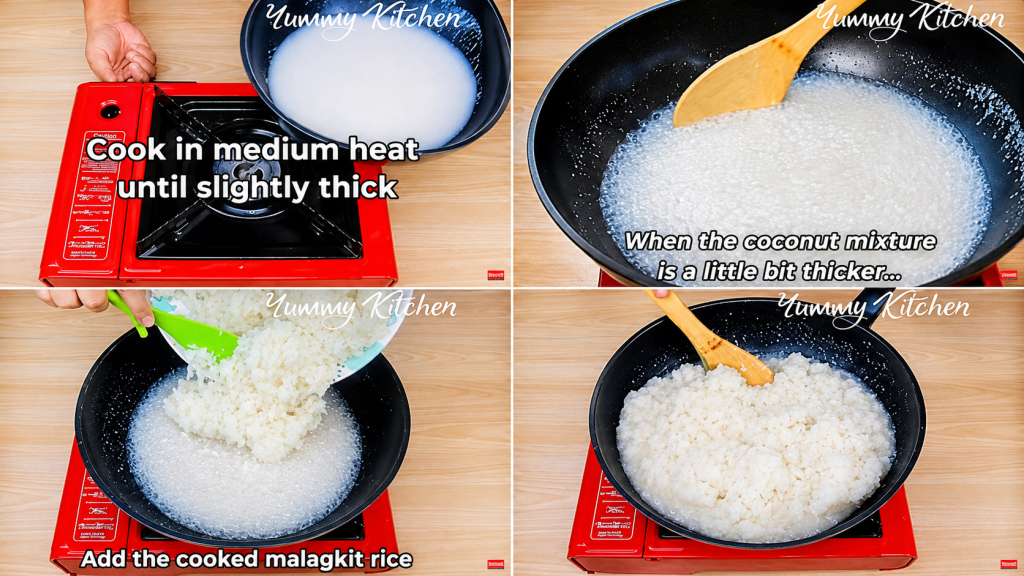
Continue simmering until the mixture begins to thicken slightly.

Step 3: Add the Sticky Rice
Add the cooked glutinous rice to the thickened coconut mixture.
Season with salt and mix thoroughly until every grain is coated.
Continue cooking while stirring occasionally until most of the liquid has evaporated and the rice becomes sticky and difficult to stir.
At this point, your sticky rice mixture is ready.

Step 4: Shape the Bibingkang Malagkit
Prepare a serving tray, baking dish, or container.
For extra aroma and authentic flavor, line it with fresh banana leaves. If banana leaves aren’t available, simply grease the dish lightly with cooking oil.
Transfer the sticky rice mixture into the prepared container.
Using a lightly greased spatula, spread and flatten the surface evenly.
Set aside while preparing the topping.

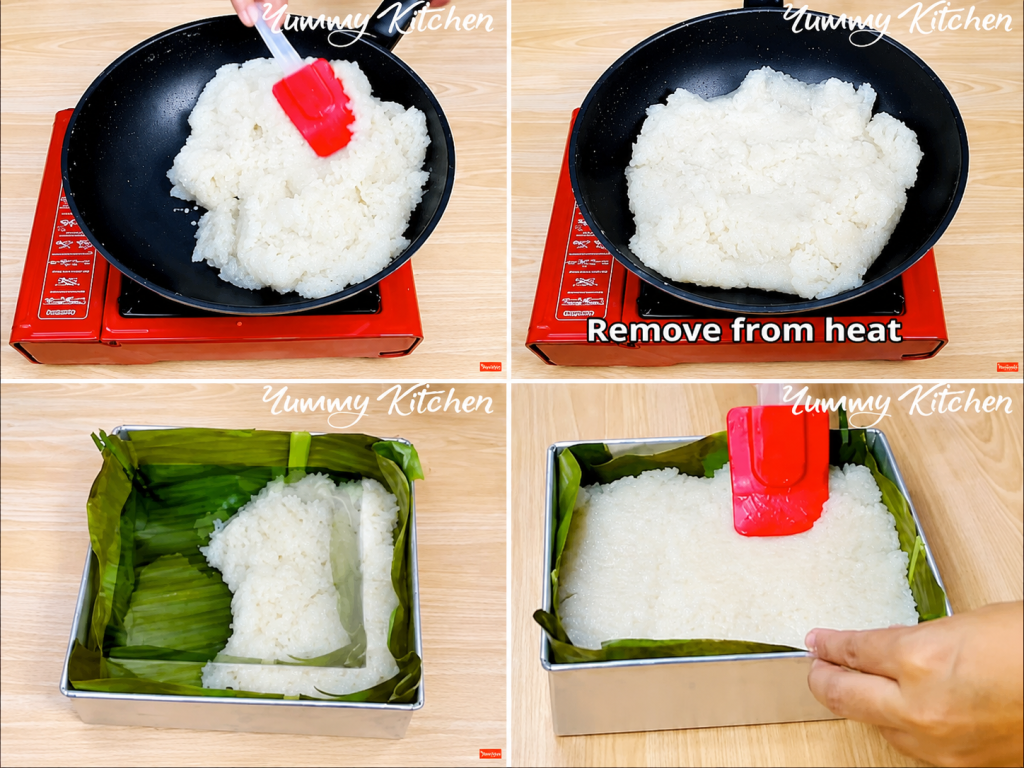
Step 5: Cook the Latik Topping
Pour the coconut milk into another pan.
Cook over low heat while stirring occasionally.
After several minutes, you’ll notice the coconut milk beginning to curdle slightly as natural oils separate.
Add the dark brown sugar and stir continuously until fully dissolved.
Continue cooking over low heat until the mixture thickens into a glossy caramel-like sauce.
Finally, add the salt to balance the sweetness.
The topping is ready once it becomes thick enough to cling to your spatula.

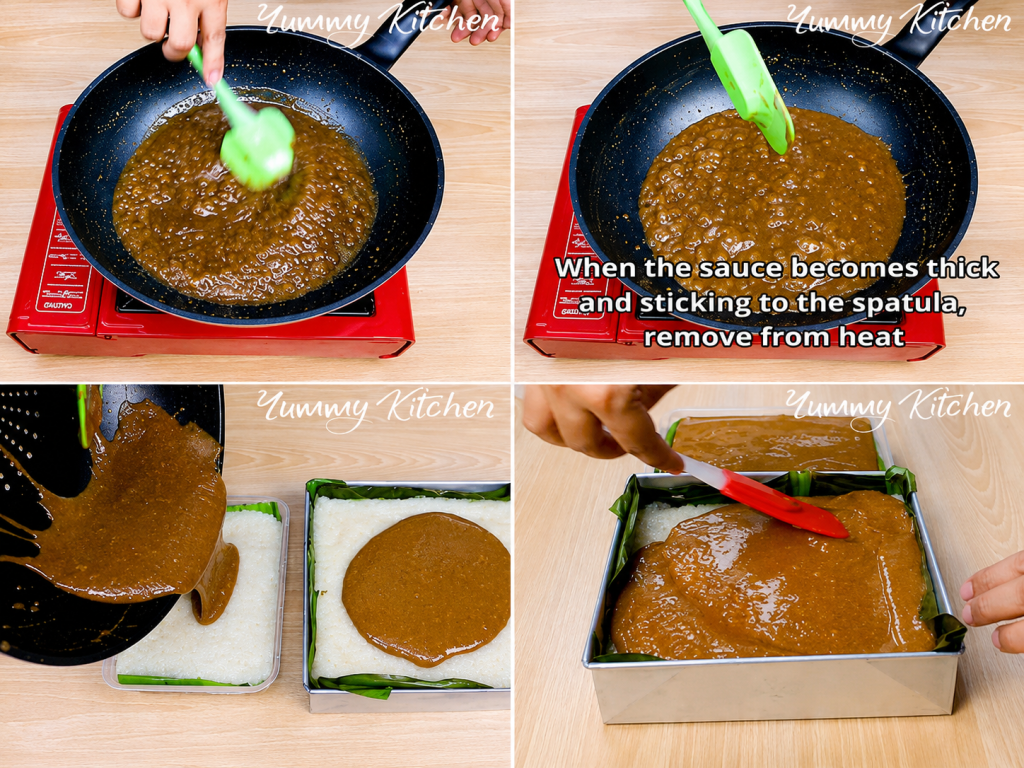
Step 6: Finish the Dessert
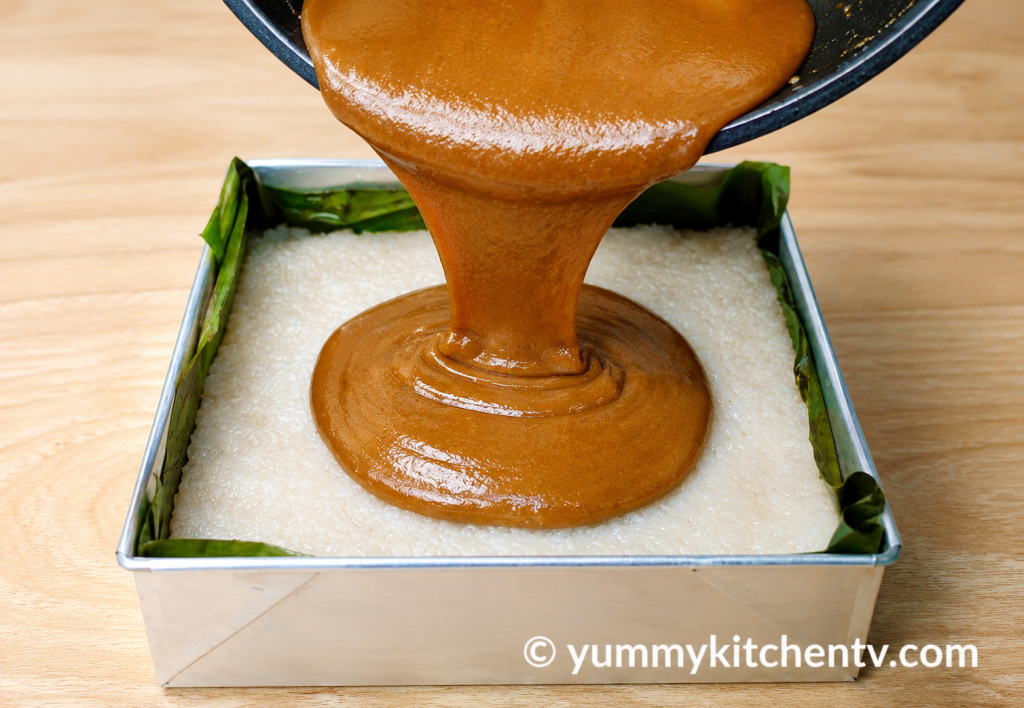
Immediately pour the hot latik topping over the prepared sticky rice.
Using a lightly oiled spatula, spread the topping evenly while it’s still warm.
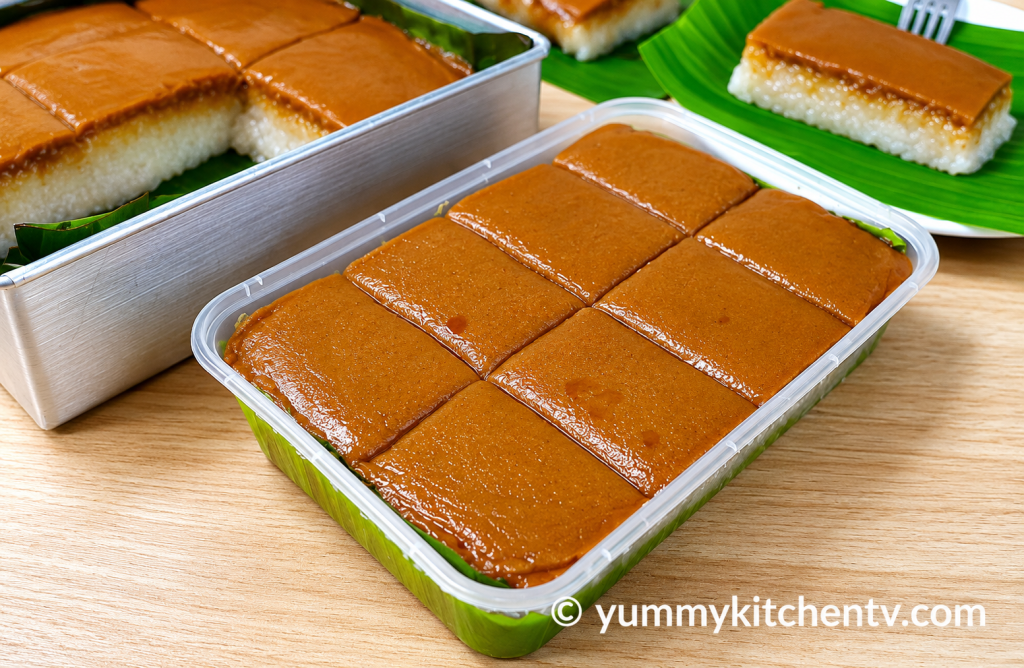
Allow the dessert to cool completely before slicing.
As it cools, the topping will firm up beautifully while the sticky rice remains soft and chewy underneath.
Serve and enjoy!

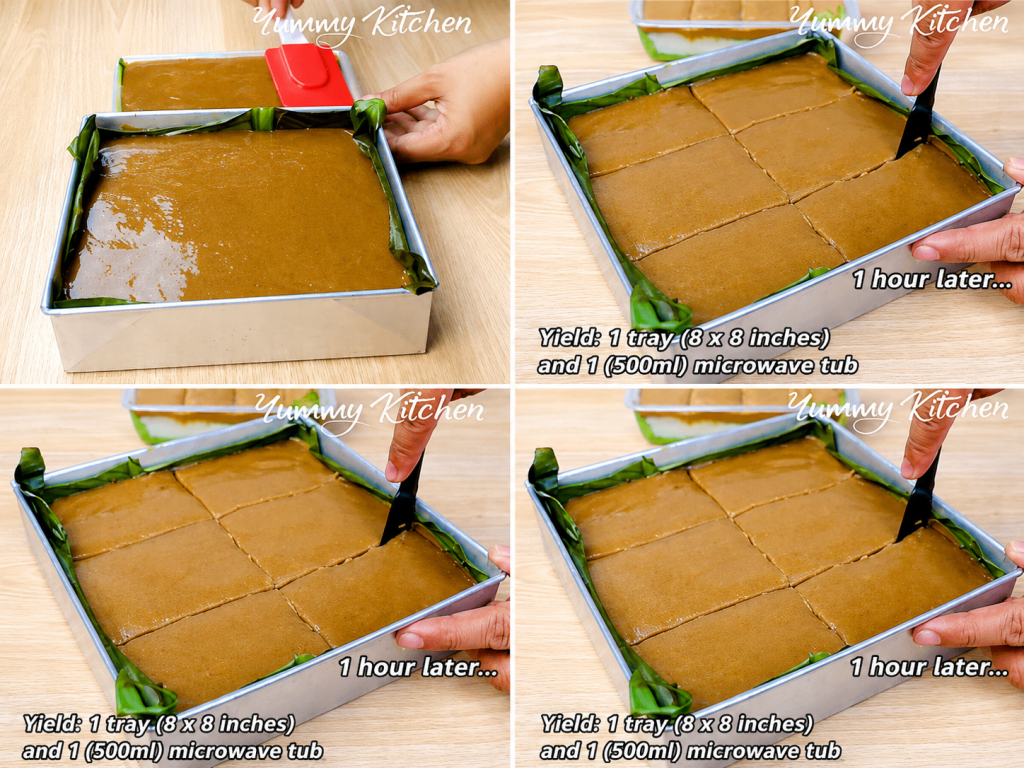

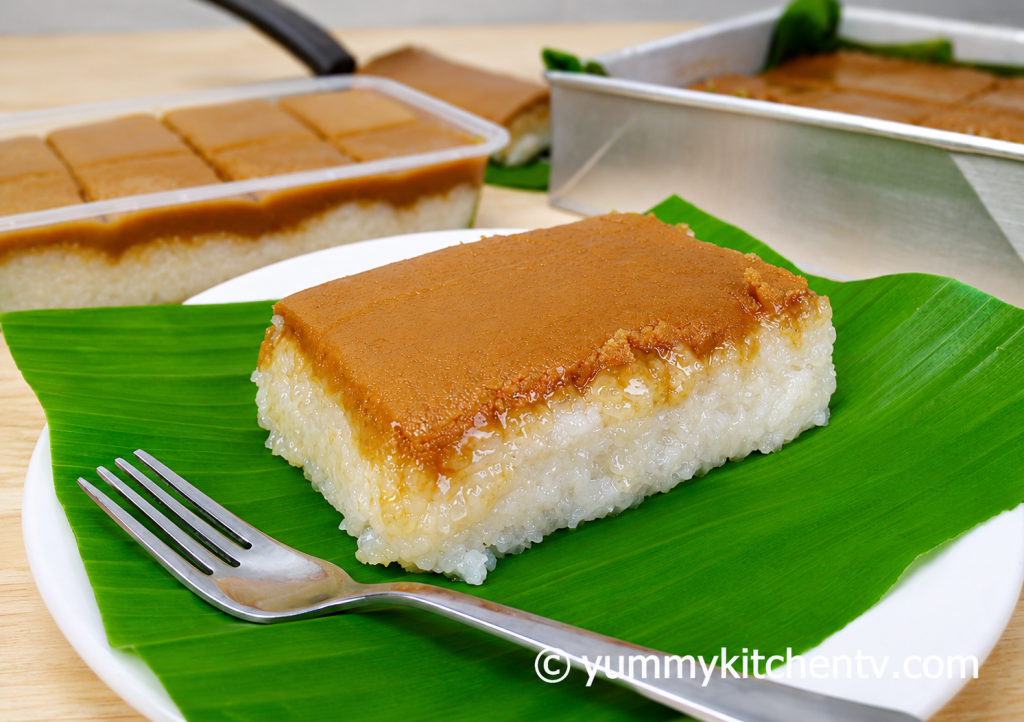
Tips and Variations
Making Bibingkang Malagkit is already simple, but these helpful tips can make it even better.
Choose high-quality coconut milk for a richer and creamier flavor. Fresh coconut milk produces the best results, although canned coconut milk also works well.
Cook the latik topping slowly over low heat. Rushing the process may cause the sugar to burn before the mixture thickens properly.
Always grease your spatula before spreading the topping to prevent sticking.
If you enjoy a deeper caramel flavor, use dark brown sugar instead of light brown sugar.
Want extra aroma? Line your serving tray with banana leaves before adding the sticky rice mixture.
For a slightly different twist, sprinkle toasted coconut flakes or sesame seeds on top before serving.
Some families also enjoy adding a little vanilla extract to the topping for a subtle sweetness.

Storage and Reheating
Because Bibingkang Malagkit contains coconut milk, proper storage is important.
Store leftovers in an airtight container inside the refrigerator for up to four days.
Before serving again, let it sit at room temperature for about 20 minutes to soften naturally.
If you prefer it warm, microwave individual slices for around 20 to 30 seconds.
Avoid freezing, as the sticky rice may lose its pleasant chewy texture after thawing.
Serving Suggestions
Bibingkang Malagkit is delicious at any time of day.
Serve it as a sweet afternoon snack with freshly brewed coffee, hot chocolate, or traditional Filipino salabat (ginger tea).
It’s also perfect as a dessert after family meals or as a centerpiece during holidays and special occasions.
For parties, slice it into bite-sized squares for easy serving. Its beautiful glossy topping makes it an eye-catching addition to any dessert table.
If you’re preparing several Filipino delicacies, pair it with favorites like kutsinta, sapin-sapin, cassava cake, puto, or suman for a colorful kakanin platter everyone will love.

Conclusion
There’s something truly comforting about homemade Bibingkang Malagkit. From its chewy glutinous rice base to its rich, sweet latik topping, every bite is filled with nostalgic Filipino flavors that bring family and friends together.
The best part is that this No-Bake Bibingkang Malagkit Recipe removes the need for an oven while preserving everything that makes this traditional delicacy so irresistible. It’s simple enough for beginners yet delicious enough to impress guests during celebrations and holidays.
Whether you’re introducing someone to Filipino cuisine or recreating a favorite childhood merienda, this easy Bibingkang Malagkit recipe is guaranteed to satisfy. Once you’ve made it from scratch, you’ll discover just how rewarding—and delicious—this timeless Filipino rice cake can be. Happy cooking!
How to Cook No Bake Bibingkang Malagkit TAGALOG
Ingredients
- 1/2 kilo Malagkit rice (glutinous rice or sticky rice)
- 2 cups coconut milk (I used coco mama fresh coconut milk)
- 1 cup white sugar
- 1⁄2 tsp. salt
- 3 cups water (for cooking the sticky rice)
- FOR LATIK TOPPING
- 1 1⁄2 cup coconut milk (I used coco mama fresh coconut milk)
- 1 1⁄2 cup dark brown sugar (adjust as needed) the darker the color, the better
- 1⁄2 tsp. salt to balance sweetness

 Print
Print
Directions
- Hugasang mabuti ang malagkit na bigas. Alisin ang tubig na pinang-hugas. Saka lagyan ng tubig (3 cups) na gagamitin para maluto ito. Isalang sa rice cooker or lutuin sa katamtamang apoy (gaya ng pagluluto ng regular na bigas). Kapag luto na, itabi muna.
- Sa isang kawali, pagsamahin ang gata at asukal. Haluin hanggang sa matunaw ang asukal. Lutuin sa katamtamang apoy hanggang sa lumapot. Haluin ng madalas.
- Kapag malapot na ang gata at asukal, maglagay ng kaunting asin at ilagay na rin ang nalutong malagkit na bigas. Haluing Mabuti. Lutuin sa mahinang apoy hanggang sa mawala ang sauce at maging malagkit na ang bigas.
- Kapag naiga o nawala na ang sauce at mahirap nang haluin ang mixture, ibig sabihin ay luto na ito. Hanguin na at ilagay sa lalagyan na may dahon ng saging sa ilalim (or pahiran muna ng mantika ang lalagyan para di dumikit). Gamit ang sandok or spatula, palaparin ito at pakinisin ang ibabaw. Itabi muna habang gumagawa ng latik topping.

- Para naman sa latik topping, lutuin sa mahinang apoy ang gata. Hintayin itong maglatik or magbuo-buo. Haluin ng madalas para hindi masunog.
- Kapag nagsimula nang magbuo-buo ang gata at nahiwalay na ang mantika nito, pwede nang ilagay ang asukal. Haluin Mabuti hanggang sa matunaw ang asukal at humalo ng husto sa latik. Lutuin ito sa mahinang apoy hanggang sa lumapot habang hinahalo ng tuloy tuloy.
- Kapag malapot na ang latik sauce, ilagay na ang asin pambalanse ng tamis. Haluing Mabuti. Kapag lumapot na ng husto ang sauce at nadikit na sa sandok o spatula, ibig sabihin ay luto na ito.
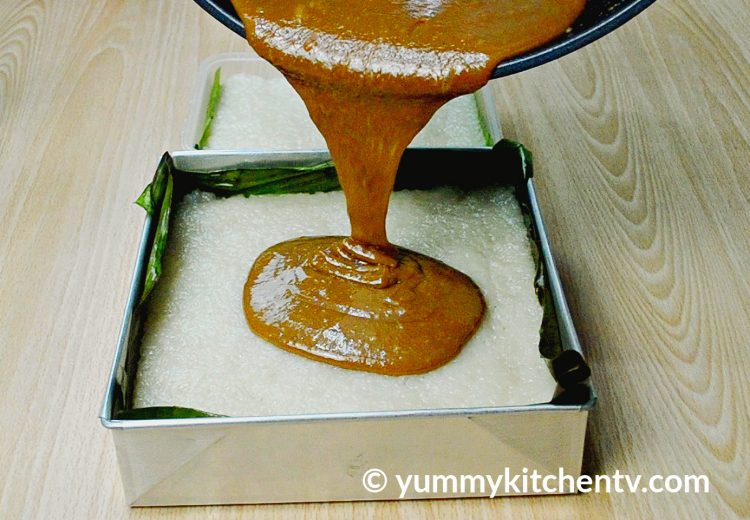
- Hanguin na ang sauce at ibuhos agad sa ibabaw nang nalutong malagkit. Mabilis itong magset kaya mabilis din dapat ang kilos. Pagkabuhos ng sauce, ikalat agad ito sa ibabaw gamit ang spatula. Para di dumakit habang pinakapakinis, lagyan ng mantika ang spatula.
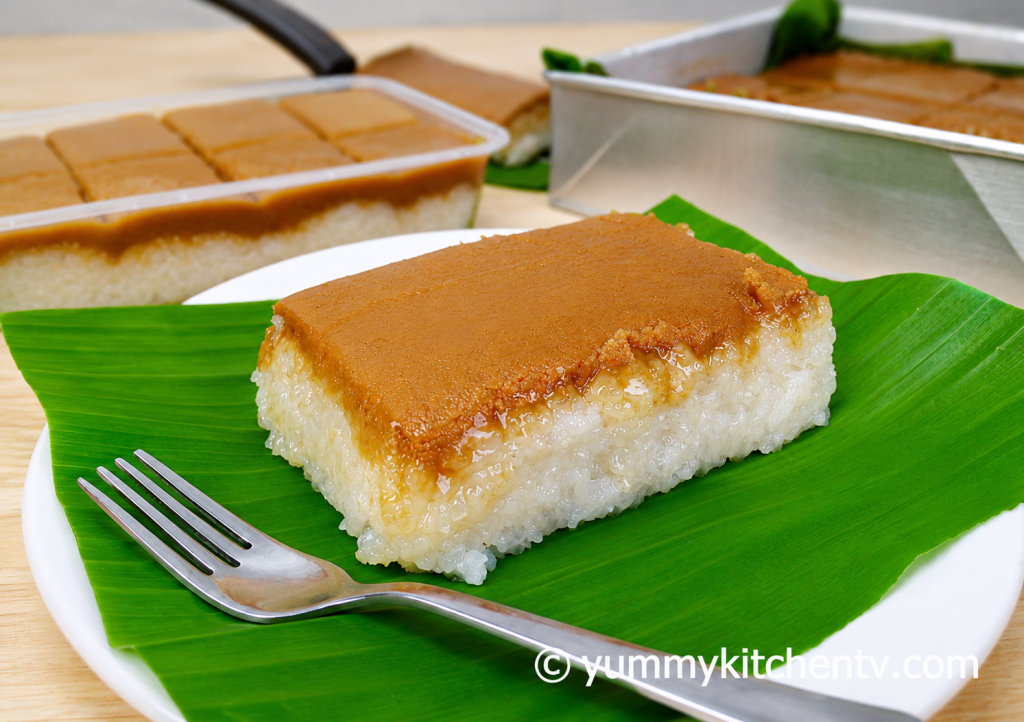
- Hayaan munang lumamig ang bibingkang malagkit bago hatiin para magset at tumigas ang topping.


Recipe Notes
- You can also bake this recipe if you have an oven. Preheat your oven to 375 F. After preheating, bake for 30 to 40 minutes or until the top is bubbly and the color turns darker.
- The sizes of the trays used to this no-bake bibingkang malagkit are 8×8 inches tray with 1.5 inches thick and 1 microwave tub (500ml).
- If you are going to use cups, 1/2 kilo (500g) malagkit rice is Around 2 1/3 cup in standard measuring cup. It is around 3 1/2 cup in rice cooker cup.
- You can also add coconut milk in cooking the glutinous rice but it cannot be used when cooked in rice cooker. For rice cooker, use water only.