Pancit Bihon Recipe: Easy Filipino Pancit Guisado
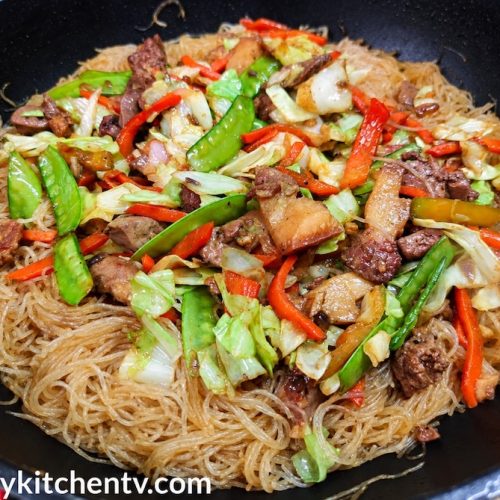
Pancit bihon is a classic Filipino noodle dish made with thin rice noodles, pork, chicken liver, and colorful vegetables. Seasoned with soy sauce, oyster sauce, fish sauce and shrimp broth, this dish is savory, satisfying and perfect for sharing.


Pancit Bihon Recipe
Equipment
- Large frying pan or wok
- Cooking tongs
- Knife and cutting board
- Measuring spoons and cups
- Mixing spoon
- Serving platter
Ingredients
- 250 grams bihon rice noodles
- ½ cup pork belly thinly sliced
- ½ cup chicken liver
- 1 medium onion chopped
- 4 cloves garlic minced
- 4 cups cabbage chopped
- 1 small carrot cut into strips
- ½ cup snow peas or green beans
- 1 medium bell pepper sliced
- 1 teaspoon black pepper
- 4 tablespoons oyster sauce divided
- 3 tablespoons soy sauce divided
- 1 tablespoon fish sauce or to taste
- 1 shrimp broth cube
- ½ tablespoon sugar optional
- 2 tablespoons chopped kinchay
- Cooking oil as needed
- 5 5 cups water
- Calamansi for serving
Instructions
- Heat a little oil in a large pan over medium heat. Add the pork belly and sear until lightly browned.
- Add the onion and garlic. Sauté until fragrant, then add the chicken liver and black pepper. Cook until the liver is thoroughly done.
- Add some soy sauce and 1–3 tablespoons of oyster sauce. Stir well, then add the carrots, snow peas or green beans, and bell pepper. Stir-fry for a few minutes.
- Add the cabbage and cook until slightly softened. Transfer the meat and vegetables to a container, reserving any flavorful cooking liquid.
- Pour 4–5 cups of water into the same pan. Add the shrimp broth cube and bring to a boil. Stir in the remaining soy sauce and oyster sauce. Season with fish sauce and optional sugar. Taste and adjust as needed.
- Reserve a little broth, then add the bihon noodles to the pan. Allow them to soften before gently separating the strands with tongs.
- Cook until the noodles absorb most of the broth. If they are still firm, add a little reserved broth and continue cooking until tender.
- Return the cooked meat and vegetables to the pan. Add the chopped kinchay and toss gently until everything is evenly combined.
- Transfer to a serving platter and serve warm with calamansi.
Notes
- Add the sauces gradually and taste the broth before adding more salt.
- Avoid overcooking the bihon, as rice noodles can become mushy.
- Reserve extra broth to help finish cooking the noodles if needed.
- Substitute chicken for pork or add shrimp for a variation.
- Refrigerate leftovers in an airtight container for 3–4 days. Reheat with a small splash of water or broth.
- Serve with fresh calamansi for a bright, citrusy finish.
Nutrition
This Pancit Bihon recipe is a favorite during birthdays, fiestas, family gatherings and other special occasions. Its long noodles are traditionally associated with long life and good fortune, making it a popular celebration dish in Filipino homes.
Also known as Pancit Guisado, this recipe is easy to prepare using simple ingredients. The secret is cooking the noodles in a flavorful broth before combining them with sautéed meat and vegetables. Serve with calamansi for a delicious homemade Filipino meal.

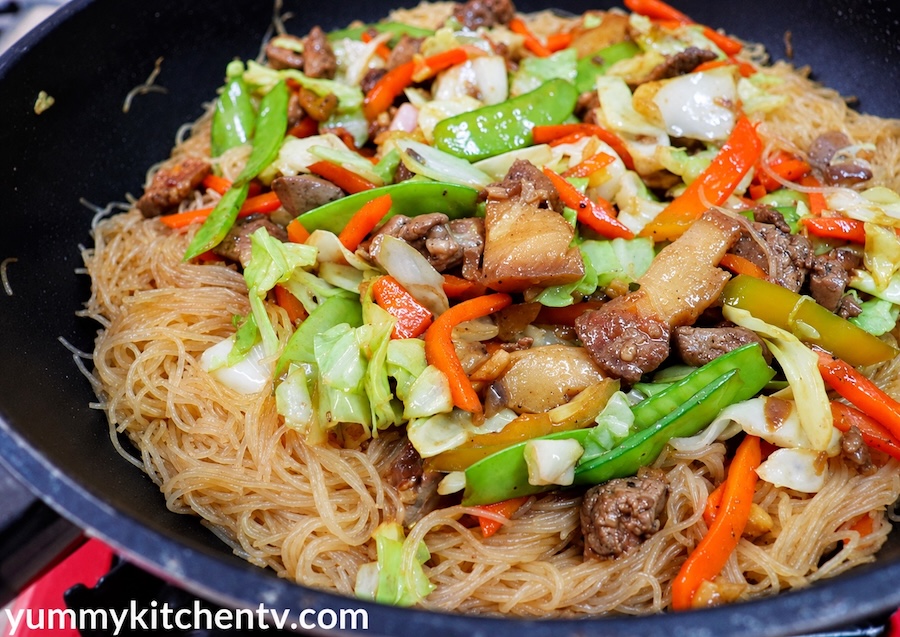
Watch how to Cook Pancit Bihon
What Is Pancit Bihon?

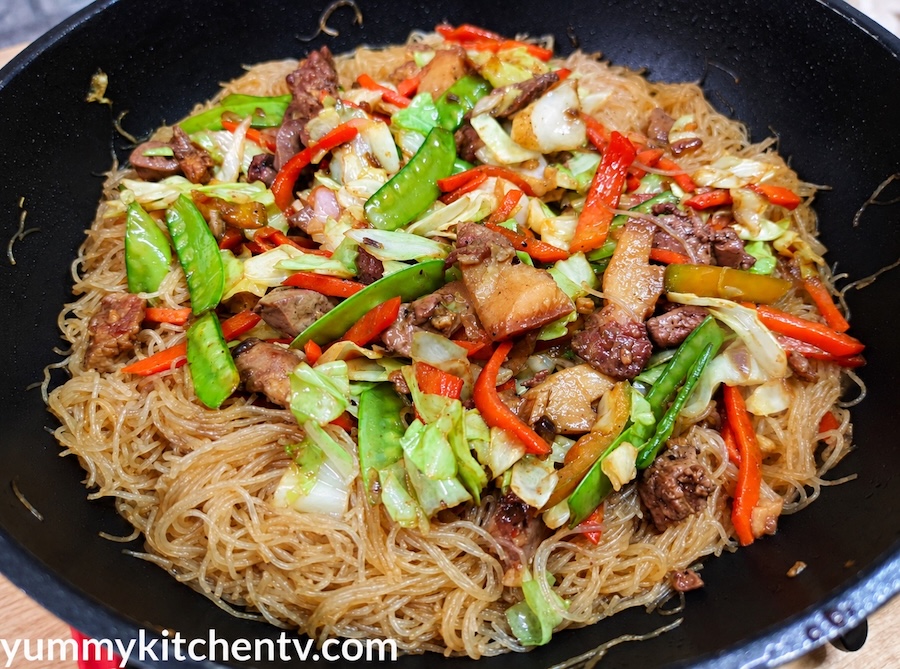
Pancit Bihon is a Filipino noodle dish made with thin rice noodles called bihon. The noodles absorb the seasonings and broth, giving them a savory flavor and slightly translucent appearance.
Pancit was influenced by Chinese noodle traditions and gradually adapted to Filipino tastes. Today, different pancit varieties are enjoyed throughout the Philippines, with bihon being one of the most popular.
The name pancit guisado refers to the sautéed ingredients used in the dish. Pork, chicken liver, garlic, onion, and vegetables are cooked together before being combined with the noodles.
Pancit bihon is commonly served at birthdays and celebrations because its long noodles symbolize long life. It can be enjoyed as a main dish, merienda, or part of a larger Filipino feast.
Why You’ll Love This Recipe
- Easy to prepare: The ingredients are simple, and the cooking process is straightforward.
- Full of flavor: Soy sauce, oyster sauce, fish sauce, and shrimp broth create a savory, satisfying taste.
- Loaded with vegetables: Cabbage, carrots, snow peas, and bell pepper add color and texture.
- Perfect for gatherings: This dish is ideal for birthdays, fiestas, potlucks, and family meals.
- Easy to customize: Adjust the vegetables and protein according to your preferences.

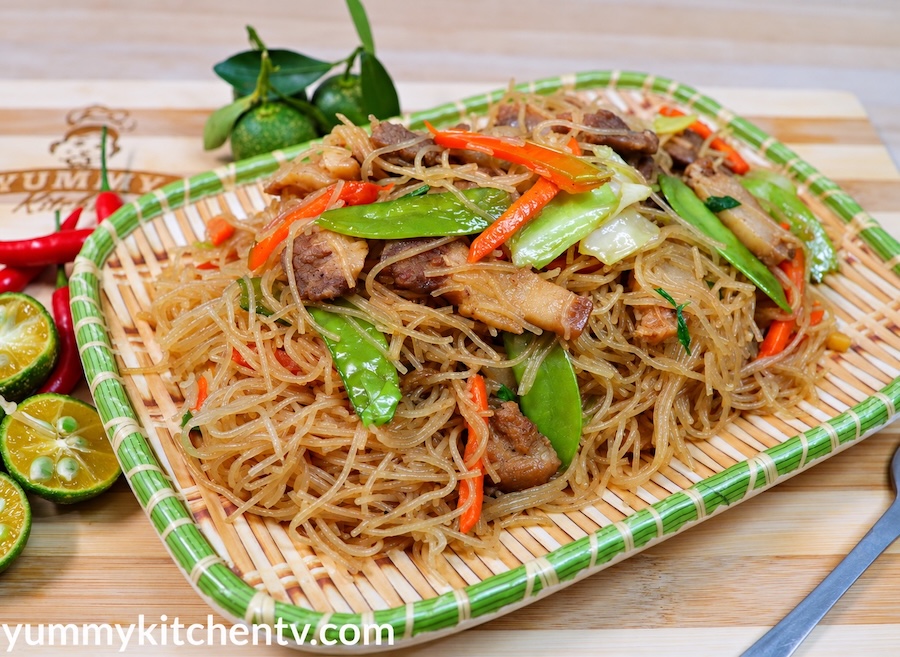
Ingredients for Pancit Bihon
Prepare the following ingredients before cooking:
- 250 grams bihon rice noodles
- ½ cup thinly sliced pork belly
- ½ cup chicken liver
- 1 medium onion, chopped
- 4 cloves garlic, minced
- 3–4 cups chopped cabbage
- 1 small carrot, cut into strips
- ½ cup snow peas or green beans
- 1 medium bell pepper, sliced
- 1 teaspoon black pepper
- 4 tablespoons oyster sauce
- 3 tablespoons soy sauce
- 1 tablespoon fish sauce
- 1 shrimp broth cube
- ½ tablespoon sugar, optional
- 2 tablespoons chopped kinchay
- Cooking oil, as needed
- 4–5 cups water for the broth
- Calamansi, for serving
The combination of meat, vegetables, and seasonings gives this homemade Pancit Bihon its familiar Filipino flavor.

How to Cook Pancit Bihon
Step 1: Sauté the Pork and Aromatics
Heat a little cooking oil in a large pan over medium heat. Add the pork belly and sear until lightly browned. The pork may release fat as it cooks.
Add the chopped onion and minced garlic. Sauté until fragrant, then add the chicken liver and black pepper. Cook until the liver is thoroughly done.
Stir in some soy sauce and one to three tablespoons of oyster sauce. Mix well to coat the meat with the seasonings.
Step 2: Add the Vegetables
Add the carrots, snow peas or green beans, and bell pepper. Stir-fry for a few minutes until they begin to soften.
Add the cabbage last because it cooks quickly. Stir-fry until slightly softened, then transfer the meat and vegetables to a container.
Drain and reserve any flavorful cooking liquid for the broth.
Step 3: Prepare the Broth
Using the same pan, pour in four to five cups of water. Add the shrimp broth cube and stir until dissolved. Bring the mixture to a boil.
Add the remaining soy sauce and oyster sauce, then season gradually with fish sauce. Add the optional sugar if you prefer a slightly sweeter flavor.
Taste the broth before adding the noodles. It should be savory without being excessively salty. Reserve some broth to use later if the noodles need additional liquid.
Step 4: Cook the Bihon Noodles
Add the bihon noodles to the boiling broth. Allow them to soften before gently separating the strands with kitchen tongs.
Toss carefully so the noodles absorb the broth evenly. Continue cooking until most of the liquid has been absorbed.
Taste the noodles to check if they are tender. If they remain firm, add a little reserved broth and continue cooking. Avoid adding too much liquid at once, as this can make the noodles mushy.
Cooking time varies depending on the noodle brand, so check the package instructions when available.
Step 5: Combine Everything
Return the sautéed pork, chicken liver, and vegetables to the pan. Toss gently until everything is evenly distributed.
Add the chopped kinchay and mix again. Taste and adjust the seasoning if necessary.
Transfer the finished pancit bihon to a serving platter. Serve warm with calamansi on the side.

Tips for Delicious Pancit Bihon
Cook the noodles carefully. Rice noodles soften quickly, so check their texture frequently to prevent overcooking.
Season gradually. Soy sauce, oyster sauce, and fish sauce all contribute saltiness. Taste the broth before adding more seasoning.
Prepare ingredients beforehand. Chop the vegetables, slice the meat, and measure the sauces before cooking. This makes the process smoother.
Cut vegetables evenly. Uniform pieces cook consistently and mix more easily with the noodles.
Reserve extra broth. A little flavorful broth can help finish cooking the noodles without diluting the dish.
Toss gently. Use kitchen tongs to separate and combine the noodles without breaking them.
Finish with calamansi. Its citrusy flavor balances the savory seasonings and makes each serving more refreshing.

Pancit Bihon Variations
You can easily adjust this Filipino Pancit Bihon recipe to suit your taste.
For a chicken version, replace the pork belly with thinly sliced chicken. Shrimp can also be added for a seafood variation. Cook shrimp just until done to prevent a rubbery texture.
For extra vegetables, add more carrots, cabbage, green beans, or bell pepper. Keep the pieces small enough to mix easily with the noodles.
For a pork-free version, omit the pork belly and chicken liver and use your preferred protein or additional vegetables. Check the broth cube and sauces if you have specific dietary requirements.
You can also adjust the black pepper and sugar according to your preference. Keep the basic cooking method the same for consistently flavorful noodles.
What to Serve with Pancit Bihon
Pancit Bihon Guisado is delicious on its own, but it also pairs well with Filipino favorites such as lumpiang shanghai, fried chicken, and barbecue.
For celebrations, serve it alongside other party dishes for a satisfying spread. For a simple meal, enjoy a plate of pancit with calamansi.
Some Filipinos also eat pancit with sliced bread or rice. Choose whichever combination your family enjoys.
How to Store and Reheat Pancit Bihon
Let the leftover pancit cool slightly before transferring it to an airtight container. Refrigerate promptly and consume within three to four days for best quality.
To reheat, place the noodles in a pan over medium-low heat. Add a small splash of water or broth, then toss gently until heated throughout.
You can also microwave individual portions in a microwave-safe container, stirring halfway through heating.
Reheat only the portion you intend to eat rather than repeatedly warming the entire batch. Discard leftovers that have been left at room temperature for too long.
Frequently Asked Questions
Is pancit bihon made from rice noodles?
Yes. Traditional bihon uses thin rice noodles that become soft and slightly translucent when cooked.
Why does my pancit bihon become mushy?
The noodles may have cooked too long or absorbed too much liquid. Add broth gradually and stop cooking when the noodles become tender.
Can I prepare pancit bihon ahead of time?
Yes. You can chop the vegetables and prepare the meat and seasonings ahead. For the best noodle texture, cook the dish closer to serving time.
What is the difference between pancit bihon and pancit canton?
Pancit bihon uses thin rice noodles, while pancit canton typically uses wheat-based noodles. Both are popular Filipino dishes but have different textures.
Enjoy Homemade Pancit Bihon
This easy Pancit Bihon recipe combines tender rice noodles, savory meat, and colorful vegetables in a flavorful broth. With careful seasoning and the right cooking technique, you can prepare a delicious Filipino favorite for everyday meals or special occasions.
Gather your ingredients, follow the simple steps, and finish each serving with fresh calamansi. Whether served at a birthday, fiesta, or family dinner, pancit bihon is a wonderful dish to share with the people you love.
Pancit Bihon Recipe (Tagalog)
MGA SANGKAP:
- 250 grams Bihon (rice noodles)
- 1 sibuyas (hiniwa)
- 4 butil ng bawang (hiniwa ng maliliit)
- 1/2 tasang pork belly (hiniwa ng maninipis)
- 1/2 tasang atay ng manok
- 3-4 tasang repolyo (hiniwa)
- 1 maliit na carrot (hiniwa ng maliliit na haba)
- 1/2 tasang sitsaro (o green beans)
- 1 kutsaritang durog na paminta
- 1 bell pepper
- 4 na kutsarang oyster sauce
- 3 kutsarang toyo
- 1 kutsarang patis
- 1 piraso ng shrimp broth cube
- 1/2 kutsarang puting asukal (optional)
- 2 kutsarang kinchay (hiniwa)
- mantika
PAANO LUTUIN:
- Magpainit ng mantika sa kawali. Ilagay ang hiniwang pork belly at iprito hanggang maging light brown. Sunod na ilagay ang sibuyas at bawang at igisa kasama ang pork belly. Sunod na idagdag ang atay ng manok. Igisa ito hanggang sa maluto. Ilagay ang toyo at 1 hanggang 3 kutsara ng oyster sauce at haluin ng mabuti.
- Sunod na ilagay ang carrots, sitsaro at bell pepper. I-stir fry ang mga ito ng ilang minuto. Ilagay ang mga hiniwang repolyo at haluin ng mabuti. Iluto ito hanggang sa lumambot at maluto ang repolyo. Ilipat ang nilutong karne at gulay sa isang lalagyan at i-drain ang sauce neto.
- Sa parehas na kawali, maglagay ng 4 hanggang 5 na tasa ng tubig. Ilagay ang shrimp broth cube at haluin hanggang sa matunaw. Hayaang kumulo ang tubig. Ilagay ang toyo at oyster sauce at haluin ang broth. Tikman para malaman kung tama na ang alat. Iadjust ang alat gamit ang patis. Magtabi ng kaunting broth.
- Ilagay ang bihon noodles. Kapag malambot na ito, paghiwahiwalayin ang strands para mas mabilis itong maluto. Iluto ang pancit hanggang sa matuyo na ang broth. Tikman kung luto na ang bihon noodles. Kung hindi pa, ilagay ang itinabing broth hanggang sa maluto ang bihon.
- Ilagay sa noodles ang gulay at karne at haluin mabuti. Ilagay ang hiniwang kinchay at haluin ulit.
- Ilipat ang pancit bihon sa serving dish.
- Lagyan ng pinigang calamansi ang bihon bago kainin. Enjoy!