Kilawing Labanos – A Tangy Filipino Radish Dish with Chicken Liver
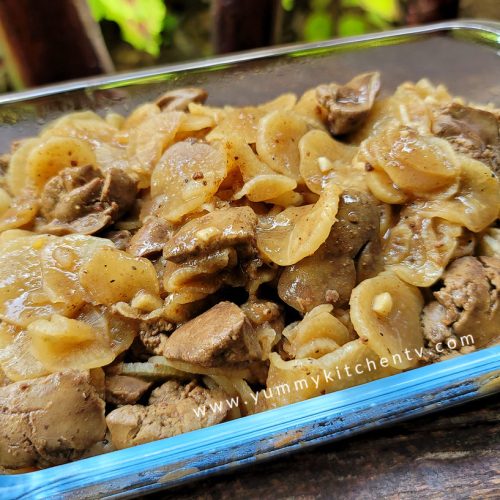
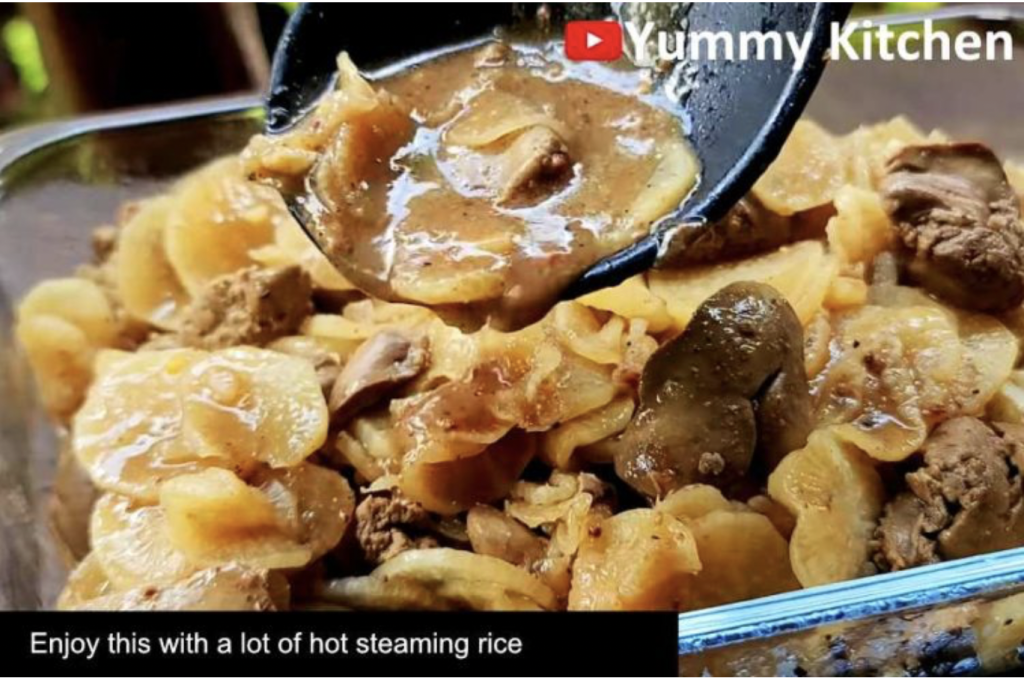
Kilawing Labanos is a flavorful Filipino dish made with thinly sliced radish, chicken liver, vinegar, soy sauce, liver spread, and simple aromatics. Tangy, savory, rich, and slightly sweet, this unique Filipino radish recipe transforms the humble labanos into a delicious ulam that is perfect with hot steamed rice.
If you are used to enjoying radish raw, pickled, or added to soups, this recipe offers a completely different way to prepare it. The labanos is salted first to remove excess moisture, then cooked with vinegar and rich seasonings until tender and packed with flavor. Chicken liver gives the dish a deeper, savory taste, while vinegar provides the signature sourness that makes every bite extra appetizing.
This Kilawing Labanos with Atay is a great choice when you want something different from the usual salty or fried dishes. Its tangy flavor can instantly wake up your appetite. Add a generous serving of rice, and you have a comforting lutong-bahay meal the whole family can enjoy.


Kilawing Labanos
Equipment
- Large bowl
- Frying pan or cooking pan
- Knife
- Chopping board
- Vegetable peeler
- Colander or strainer
- Cooking spoon or spatula
- Measuring cups and spoons
- Serving plate
Ingredients
- 1 Kg Radish (labanos)
- Salt for preparing the radish
- 300 grams Chicken Liver
- 4 cloves Garlic minced
- 1 medium Onion chopped
- 2 Tbsps Soy sauce
- 3 Tbsps Vinegar
- 2 Tbsps Liver spread
- Pepper to taste
- Sugar to taste
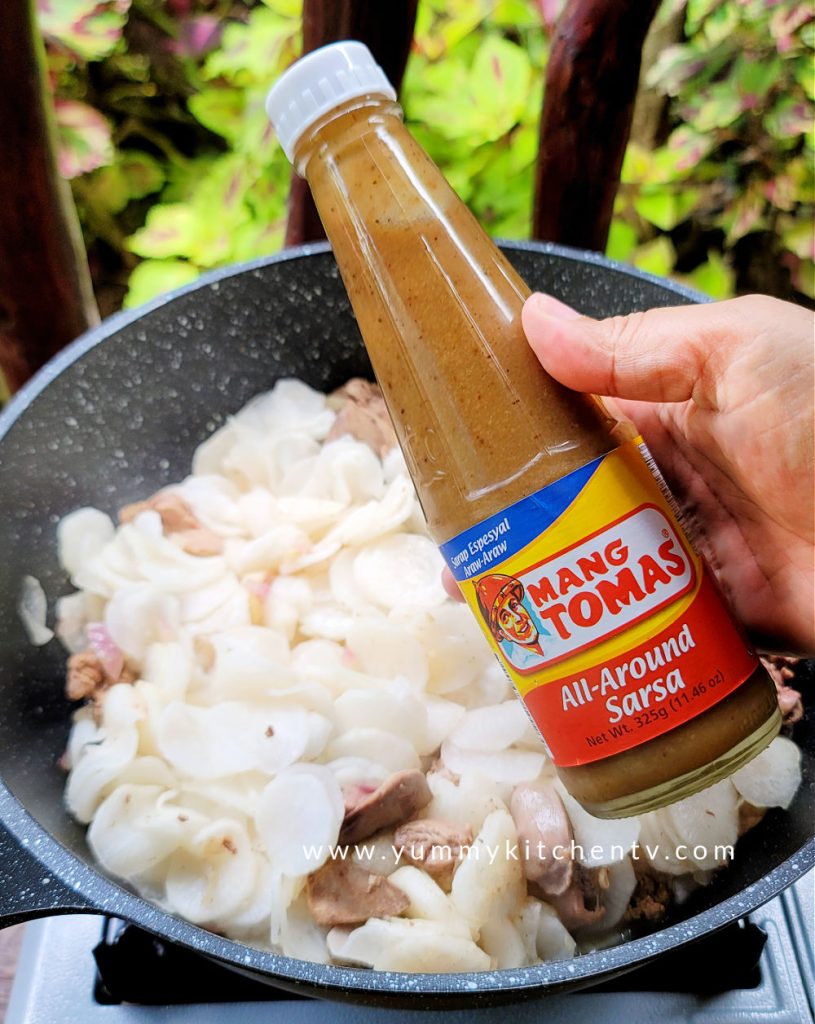
- ¼ Cup Mang Tomas sarsa
- Cooking oil for sautéing
Instructions
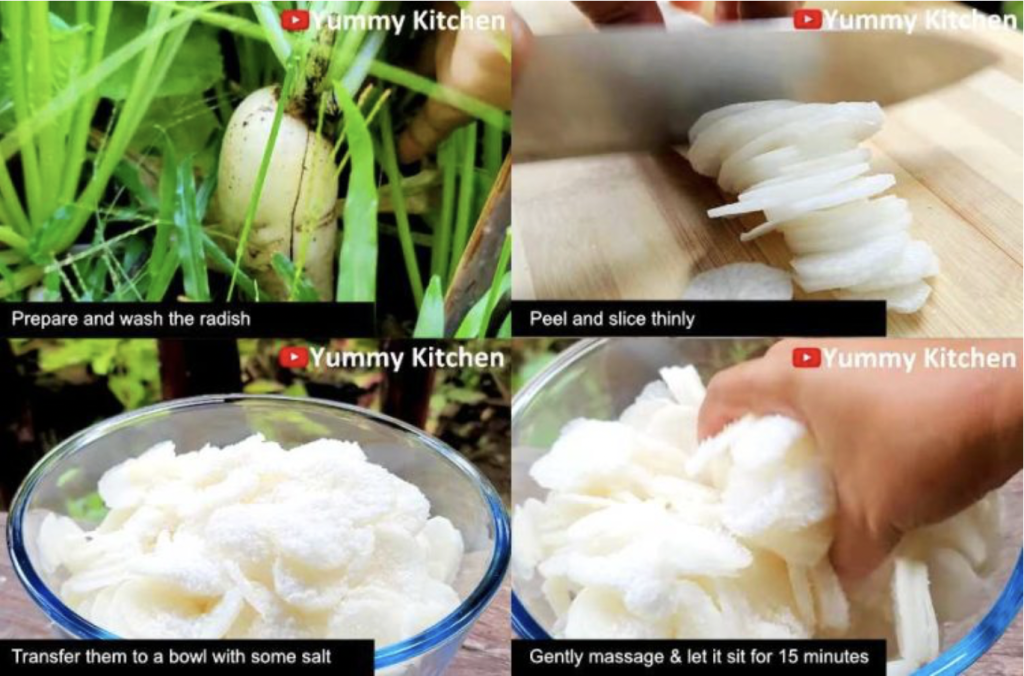
- Wash and peel the radishes. Slice them thinly and transfer to a large bowl.
- Add some salt and gently massage the radish. Let it sit for 15 minutes.
- Drain the liquid released by the radish. Rinse the radish twice with clean water to remove excess salt, then drain well.
- Heat some cooking oil in a pan over medium heat.
- Add the garlic and onions. Sauté until fragrant and the onions begin to soften.
- Add the chicken liver and sauté until it changes color and starts to cook through.
- Add the drained radish and vinegar. Do not stir for 2 to 3 minutes to allow the strong vinegar flavor to mellow.
- Stir gently, then add the liver spread, soy sauce, Mang Tomas sarsa, and pepper.
- Mix until well combined. Cover the pan and let the dish simmer for 7 to 10 minutes or until the radish is tender.
- Taste and add sugar as needed to balance the sourness of the vinegar.
- Turn off the heat and transfer the Kilawing Labanos to a serving plate.
- Serve warm with hot steamed rice and enjoy!
Notes
Nutrition
What Is Kilawing Labanos?

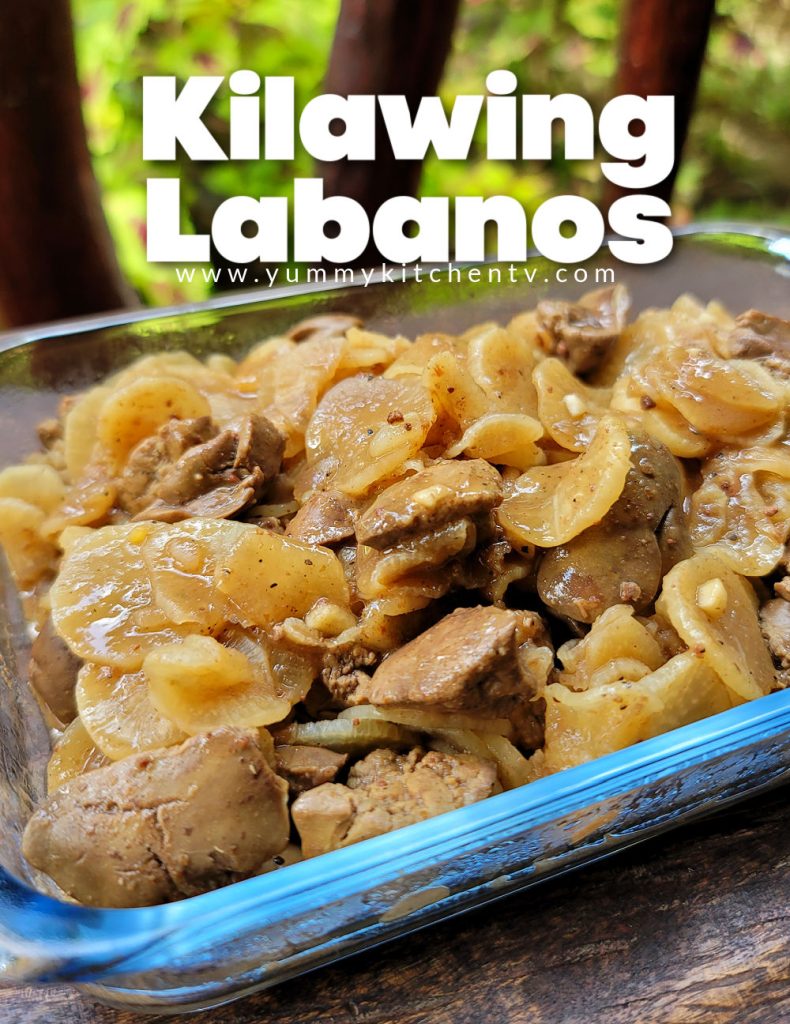
Kilawing Labanos is a Filipino dish that features radish cooked with vinegar and savory seasonings. Unlike fresh kinilaw dishes made with raw seafood, this version is cooked in a pan with garlic, onions, chicken liver, and a flavorful sauce.
Vinegar plays an important role in the recipe. It gives the dish its distinct tangy taste and balances the richness of the chicken liver and liver spread. Soy sauce adds saltiness and umami, while a little sugar helps soften the sharp acidity of the vinegar.
There are different versions of Kilawing Labanos throughout the Philippines. Some families use chicken liver, while others prepare it with ground pork. You may also find Kilawing Labanos Batangas style and other regional variations with slightly different seasonings and cooking techniques.
What makes this dish special is how well the radish absorbs flavor. Labanos may look simple, but once cooked with vinegar and savory ingredients, it becomes tender, juicy, and surprisingly delicious.
What Is Labanos?

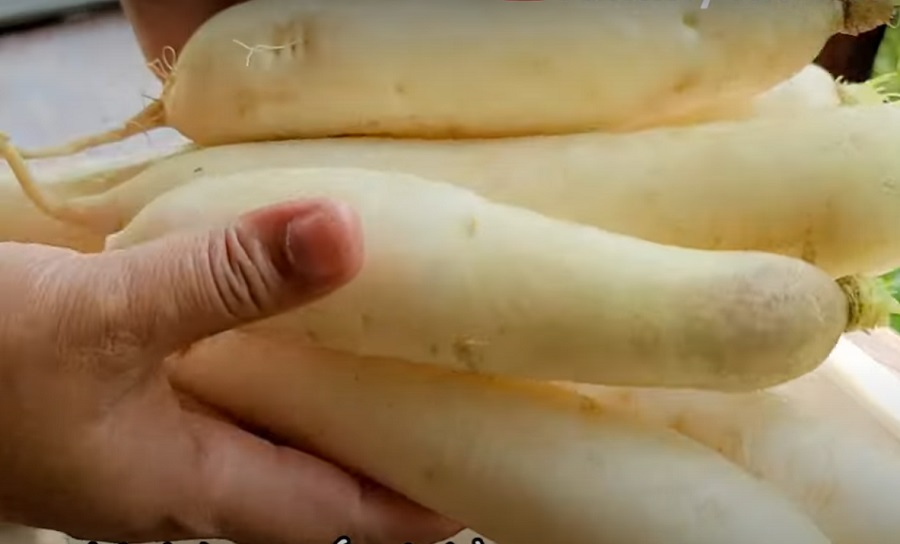
Labanos, or radish in English, is a root vegetable commonly found in Philippine markets. The variety usually used in Filipino cooking is long, white, and slightly pointed at the end. It is similar to daikon radish, which is widely used in other Asian cuisines.
Radishes come in different shapes and colors. Some varieties are small and round, while others have red, pink, or purple skin. Filipino labanos is generally white and elongated.
When raw, labanos has a crisp texture and a slightly peppery flavor. Once cooked, it becomes softer and milder. It also absorbs sauces and seasonings very well, making it a versatile ingredient for many dishes.
Labanos can be used in soups, ginisang gulay, ensalada, atsara, and kilawin. Pickled radish has also become more familiar to many Filipinos because it is commonly served alongside Korean barbecue or samgyupsal.
For this recipe, the labanos is sliced thinly and treated with salt before cooking. This helps remove excess water and prepares the radish to absorb the tangy and savory sauce.
Why You’ll Love This Recipe

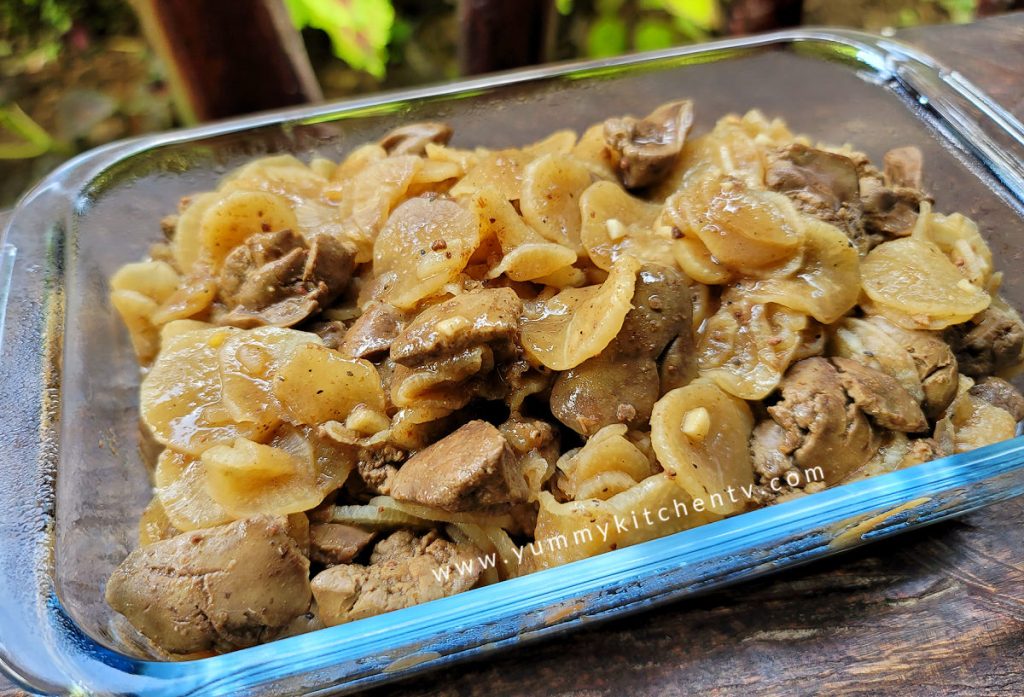
There are many reasons to try this easy Kilawing Labanos recipe. First, it uses affordable ingredients and turns a simple root vegetable into a satisfying family meal.
The combination of tangy vinegar and rich chicken liver is also surprisingly delicious. The sourness cuts through the richness of the liver, preventing the dish from tasting too heavy. Meanwhile, the radish absorbs all those wonderful flavors.
This recipe is also beginner-friendly. The cooking process is simple, and you can easily adjust the taste. Add sugar if the vinegar is too sharp or extra pepper if you want a stronger flavor.
Most importantly, this is a great recipe for anyone looking for a different way to cook labanos. Instead of using it only in soup or pickles, you can transform it into a flavorful Filipino vegetable dish worthy of extra rice.
Ingredients for Kilawing Labanos
Radish or Labanos
You will need 1 kilo of radish. Choose fresh and firm labanos without large soft or damaged areas. Peel the radishes and slice them thinly so they cook evenly and absorb the seasonings.
Chicken Liver
Use 300 grams of chicken liver. The liver gives the dish a rich and savory flavor that pairs beautifully with the tangy vinegar.
If you are not a fan of chicken liver, you can replace it with ground pork. Some cooks also combine liver and ground pork for a meatier dish.
Garlic and Onion
Four cloves of garlic and one medium onion create the aromatic base. Sautéing them in oil brings out their flavor and makes the dish smell extra appetizing.
Soy Sauce and Vinegar
Two tablespoons of soy sauce add saltiness and umami, while three tablespoons of vinegar provide the signature sour flavor of Kilawing Labanos.
Liver Spread
Two tablespoons of liver spread make the sauce richer and complement the chicken liver. It also adds body to the dish.
Mang Tomas Sarsa
A quarter cup of Mang Tomas sarsa adds savory flavor and slight sweetness. It helps create a flavorful sauce that coats the radish.
Pepper and Sugar
Pepper adds warmth, while sugar balances the acidity of the vinegar. Add sugar gradually according to your preferred taste.

Step-by-Step Method
Step 1: Prepare the Radish
Wash the radishes thoroughly to remove any dirt or soil. Peel each labanos and slice it thinly.
Transfer the sliced radish to a large bowl. Sprinkle with salt and gently massage the slices using clean hands. Make sure the salt is distributed evenly.
Let the radish sit for about 15 minutes. The salt will draw out excess moisture from the labanos.

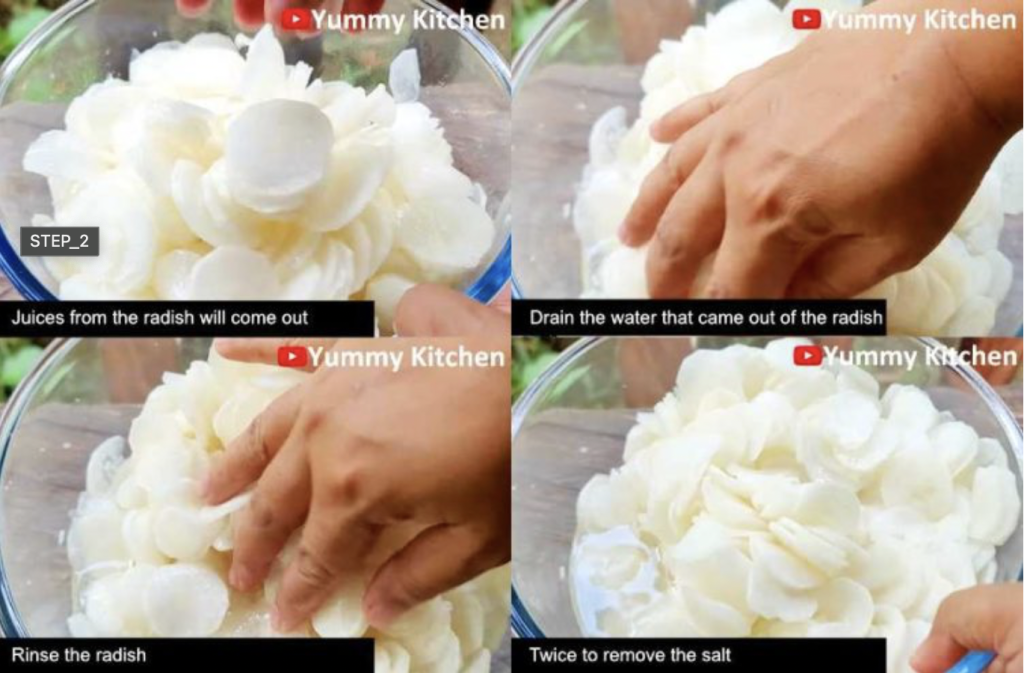
Step 2: Drain and Rinse
After 15 minutes, drain the liquid that has collected in the bowl.
Rinse the radish twice with clean water to remove excess salt. Drain thoroughly before cooking.
Do not skip this step. Too much remaining salt may make the dish overly salty once the soy sauce and other seasonings are added.

Step 3: Sauté the Aromatics
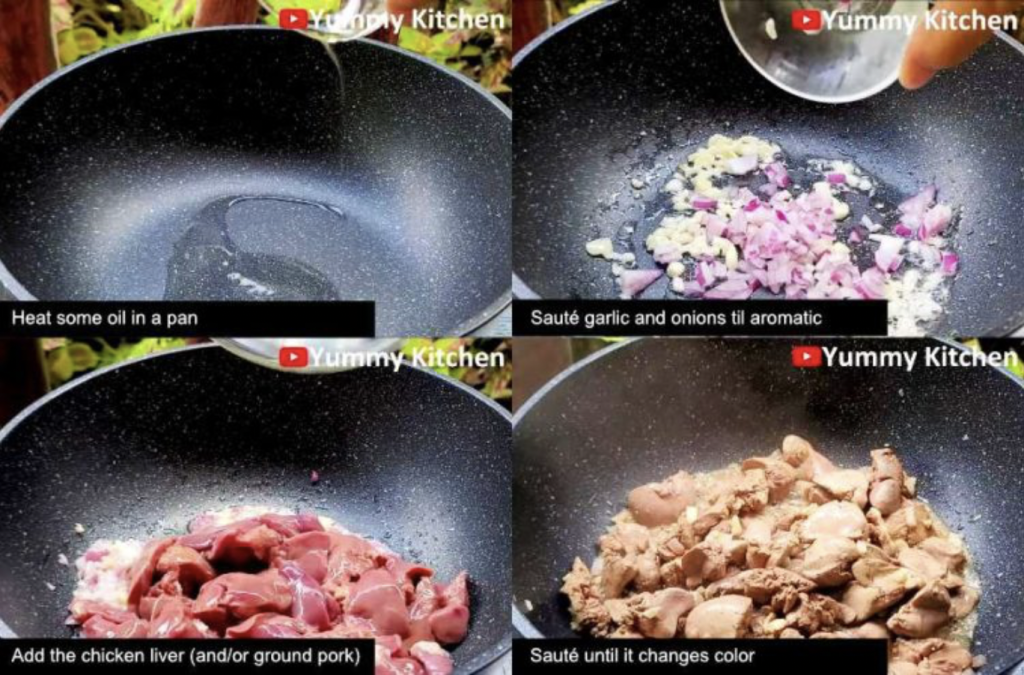
Heat a small amount of cooking oil in a pan over medium heat.
Add the garlic and onions. Sauté for a few minutes until fragrant and the onions begin to soften.
Avoid burning the garlic because it may give the dish a bitter taste.
Step 4: Cook the Chicken Liver
Add the chicken liver to the pan. Sauté until it changes color and begins to cook.
Stir gently so the liver does not completely break apart. If using ground pork instead, cook it until lightly browned.

Step 5: Add the Radish and Vinegar
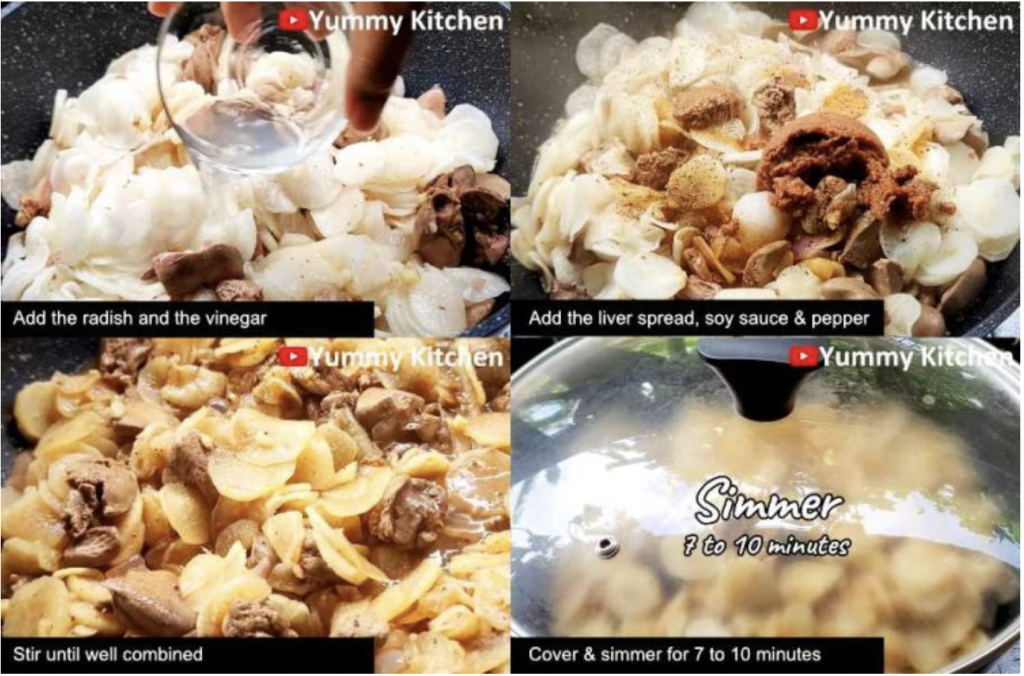
Add the drained labanos to the pan, followed by the vinegar.
Once you add the vinegar, do not stir for 2 to 3 minutes. Let the mixture simmer first.
This helps cook off the strong raw taste of the vinegar. Stirring too soon may leave the dish with an overly sharp vinegar flavor.
After 2 to 3 minutes, gently stir the ingredients together.

Step 6: Add the Seasonings
Add the liver spread, soy sauce, Mang Tomas sarsa, and pepper. Stir until everything is well combined.
Cover the pan and let the Kilawing Labanos simmer for 7 to 10 minutes. During this time, the radish will soften and absorb the flavors of the sauce.
Check the dish occasionally to prevent it from becoming too dry.

Step 7: Taste and Adjust
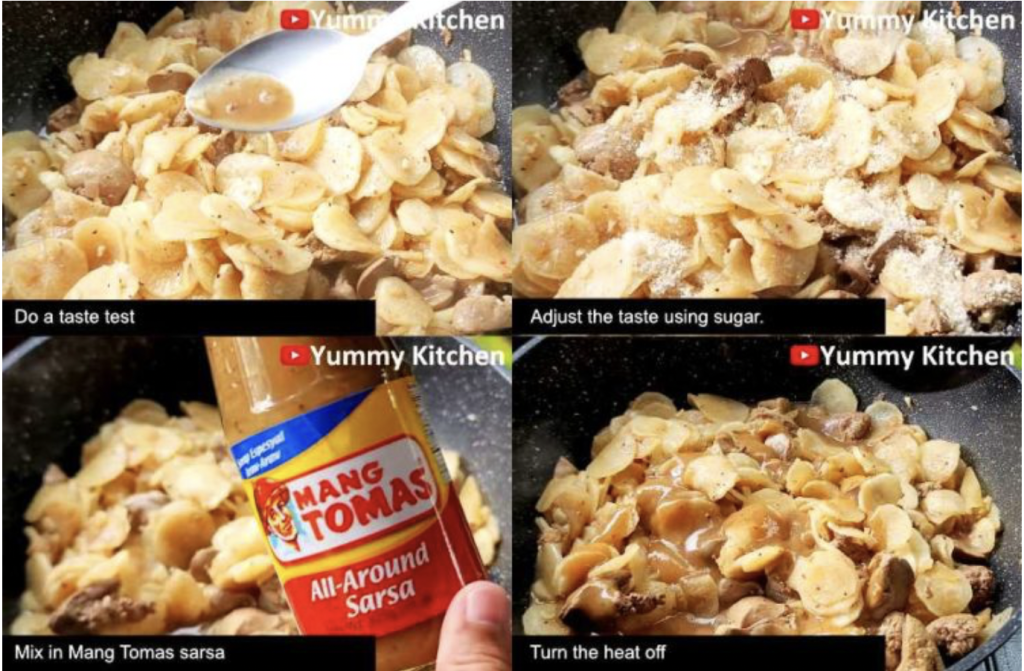
Taste the Kilawing Labanos and add sugar as needed. Start with a small amount, stir, and taste again.
The sugar should balance the acidity without making the dish overly sweet. The tangy vinegar flavor should still be noticeable.
Once the radish is tender and the flavors are balanced, turn off the heat. Transfer the dish to a serving plate and serve warm.

Tips and Variations
Slice the labanos thinly and evenly. Similar-sized pieces will cook at the same rate and absorb the seasonings more consistently.
Do not skip salting the radish. This step draws out excess moisture and helps improve the texture of the labanos. Just remember to rinse the slices twice afterward.
When adding vinegar, avoid stirring immediately. Let it simmer for a few minutes to mellow its sharp taste. This simple Filipino cooking technique makes a noticeable difference in vinegar-based dishes.
If chicken liver is not your favorite, use ground pork instead. You can also combine chicken liver and ground pork for a richer and more filling version.
For a spicy Kilawing Labanos, add chopped chilies or siling labuyo. A little heat pairs wonderfully with the tangy vinegar and savory sauce.
You can also adjust the amount of sugar depending on the vinegar you use. Some types of vinegar are sharper than others, so always taste the dish before adding more sugar.
Avoid overcooking the labanos if you prefer some texture. Cook it just until tender. If you like softer radish, let the dish simmer a little longer.
Most importantly, taste and adjust the seasonings. Filipino home cooking is all about finding the balance that your family enjoys.

Storage and Reheating
Store leftover Kilawing Labanos with Atay in an airtight container in the refrigerator for up to 2 to 3 days.
To reheat, transfer the dish to a pan and warm it over low to medium heat. Stir gently until heated through. If the sauce has become too dry, add a small splash of water.
You can also reheat the dish in the microwave. Heat it in short intervals and stir between each interval to ensure even heating.
Because this recipe contains chicken liver, always refrigerate leftovers promptly and reheat them thoroughly before serving.
Serving Suggestions
Kilawing Labanos is best served with hot steamed white rice. The tangy and savory sauce makes it an excellent rice topper, especially when you spoon some of the flavorful sauce over freshly cooked rice.
Serve it for lunch or dinner alongside fried or grilled dishes. The sour flavor of the labanos provides a delicious contrast to rich and oily food.
Some people even enjoy Kilawing Labanos as pulutan during casual gatherings. A vegetable-based pulutan with chicken liver? Very healthy yarn!
Whether served as an everyday ulam or shared with friends, this dish is best enjoyed warm.
Conclusion
Kilawing Labanos is a delicious way to transform simple radish into a bold and flavorful Filipino dish. With tender labanos, rich chicken liver, tangy vinegar, and savory seasonings, every bite offers an exciting balance of sour, salty, rich, and slightly sweet flavors.
This Filipino radish recipe is affordable, easy to prepare, and perfect for home cooks looking for a new way to enjoy labanos. Use chicken liver for a rich and traditional-style dish or replace it with ground pork according to your preference.
Serve your Kilawing Labanos with plenty of hot rice and adjust the sweet and sour balance to suit your taste. Simple, tangy, and satisfying, this lutong-bahay favorite proves that even the humble labanos can become a truly delicious meal. Happy cooking!