Kinilaw na Dilis : A Fresh and Flavorful Filipino Delight
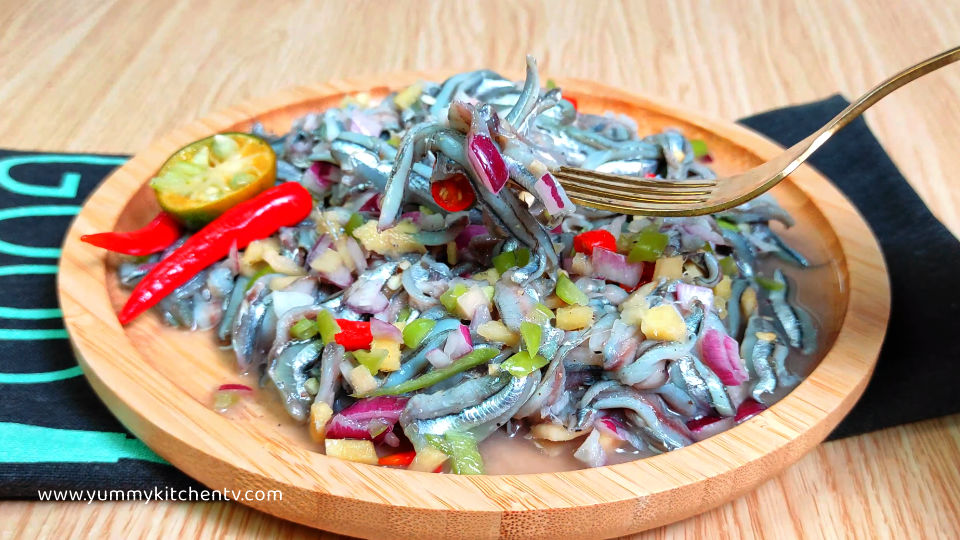
Kinilaw na dilis or kilawing dilis is a popular Filipino fish ceviche wherein fresh seafoods are marinated and seasoned in a mixture of calamansi juice, fresh ginger, onion, chili, vinegar, sugar, pepper and salt. The kinilaw na dilis is usually made spicy and enjoyed as a pulutan to an ice cold beer.


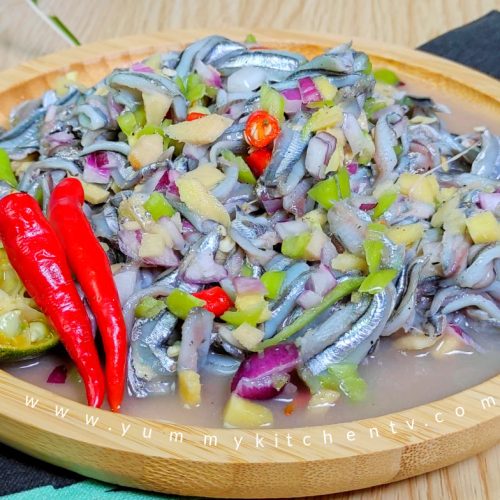
Kinilaw na Dilis
Ingredients
- 1/2 kilo anchovies dilis
- 3 pieces long green chilies
- 3 pieces red chilies
- 2 thumb size ginger minced
- 1 onion minced
- 5 calamansi squeezed
- 3 tablespoons vinegar
- Pepper to taste
- Salt to taste
- Sugar to taste
Instructions
- Wash and prepare the anchovies. Gently twist the head and pull the innards. Squeeze the belly of the fish gently to remove the remaining innards and then pull the bone and tail to remove. Do these steps with the rest of the anchovies. Set aside.
- Wash and rinse them again thoroughly and then transfer the anchovies into a bowl.
- Add the minced ginger, onions, chopped red and green chilies, calamansi extract and vinegar. Lastly, season with some salt, pepper and sugar. Mix until well combined.
- Cover the bowl using a plastic wrap and refrigerate for at least 30 minutes.
- Give it a little stir before transferring to a serving plate. Enjoy this as an appetizer, ulam to hot steaming rice or pulutan to an ice cold beer. Yum!
Video
What Is Kinilaw?
Kinilaw (sometimes spelled kilawin in some regions) refers to a Filipino raw seafood dish that uses acidic marinade — typically vinegar and citrus like calamansi — to cure the fish rather than using heat. This technique is often likened to ceviche from Latin America, although kinilaw has its own unique cultural roots and flavor profiles.
In many coastal provinces of the Philippines, kinilaw is believed to predate Spanish colonial influences and was traditionally a way for fishermen to preserve and enjoy their freshest catch without cooking over fire.
The acid in the marinade denatures the fish proteins in a process similar to cooking, changing the texture from translucent and raw to firm and opaque — all while keeping the flesh tender.

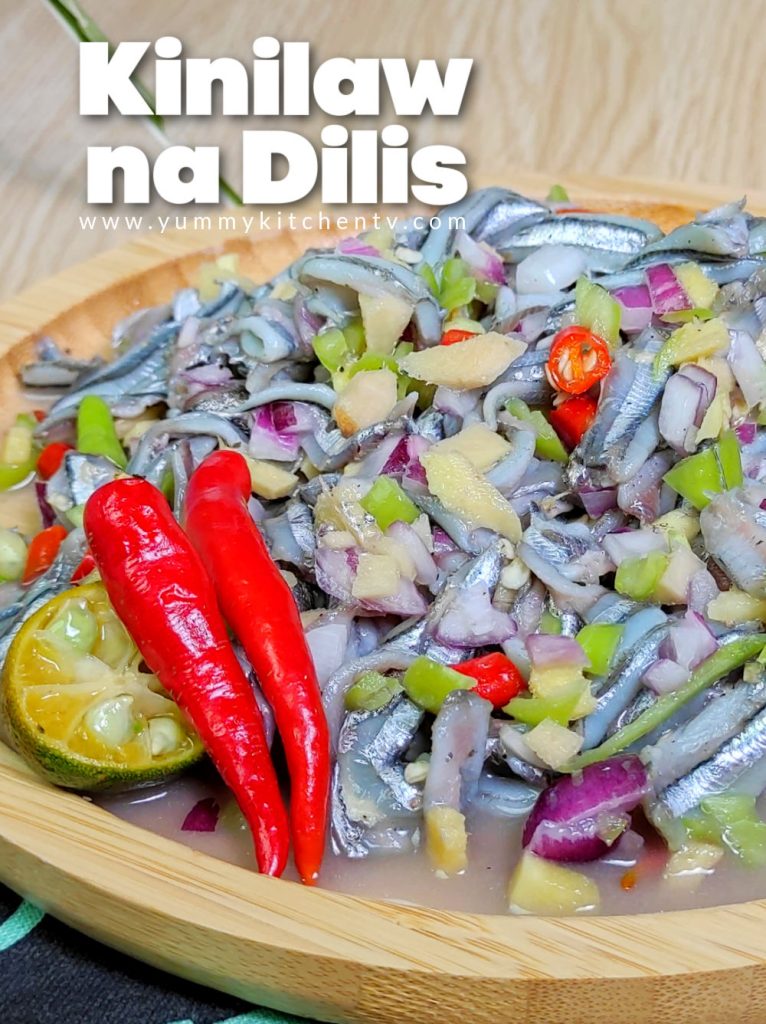
Ingredients
- Anchovies – the main ingredient – protein of the dish.
- Green and Red chilies – adds spice.
- Ginger and Onion – aromatics to help enhance the flavor and remove any foul smells or taste the fish may have.
- Calamansi and Vinegar – acids to help ‘cook’ the fish.
- Sugar, Salt and Pepper – to taste.

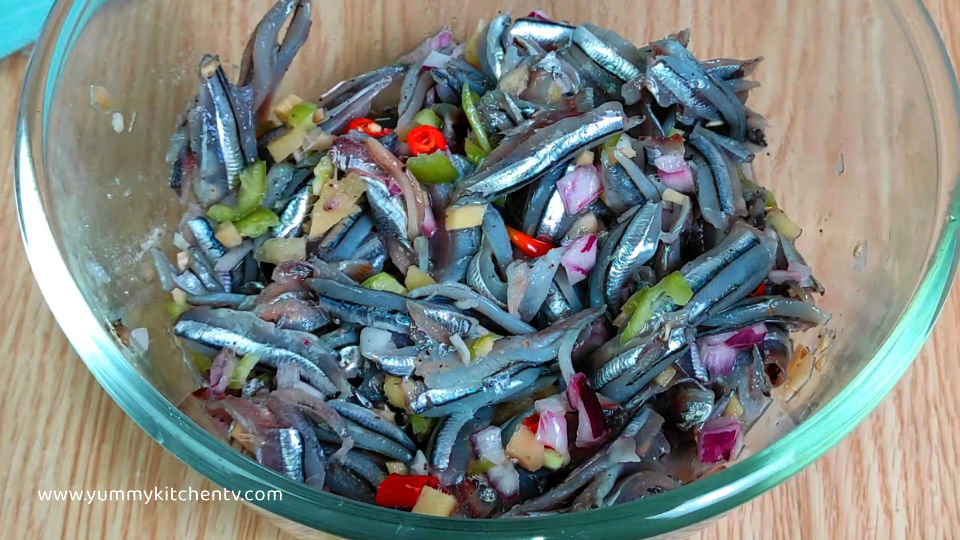
Kinilaw na Dilis Recipe
Ingredients
- 1/2 kilo anchovies (dilis)
- 3 pieces long green chilies
- 3 pieces red chilies
- 2 thumb size ginger (minced)
- 1 onion (minced)
- 5 calamansi (squeezed)
- 3 tablespoons vinegar
- Pepper to taste
- Salt to taste
- Sugar to taste
Directions
1. Wash and prepare the anchovies. Gently twist the head and pull the innards. Squeeze the belly of the fish gently to remove the remaining innards and then pull the bone and tail to remove. Do these steps with the rest of the anchovies. Set aside.

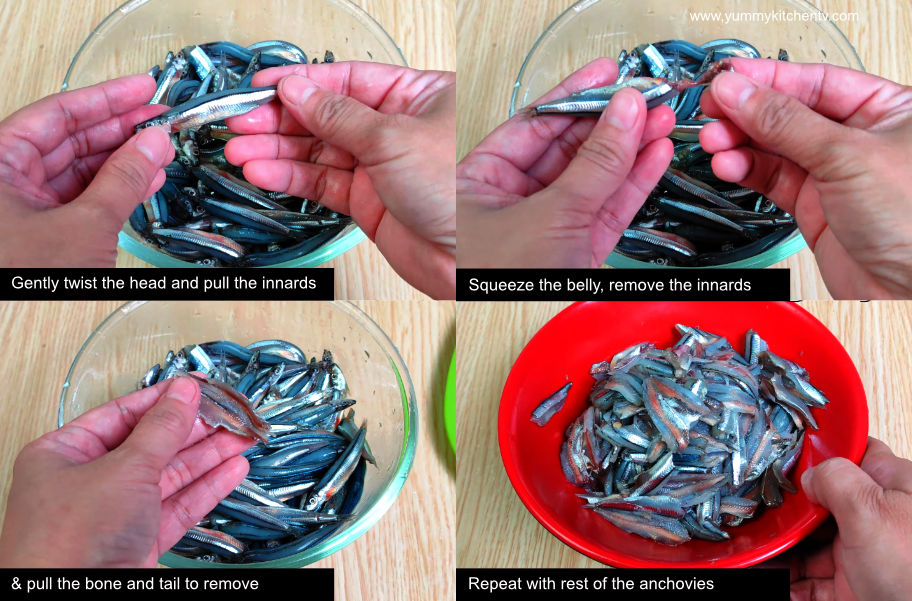
2. Wash and rinse them again thoroughly and then transfer the anchovies into a bowl.

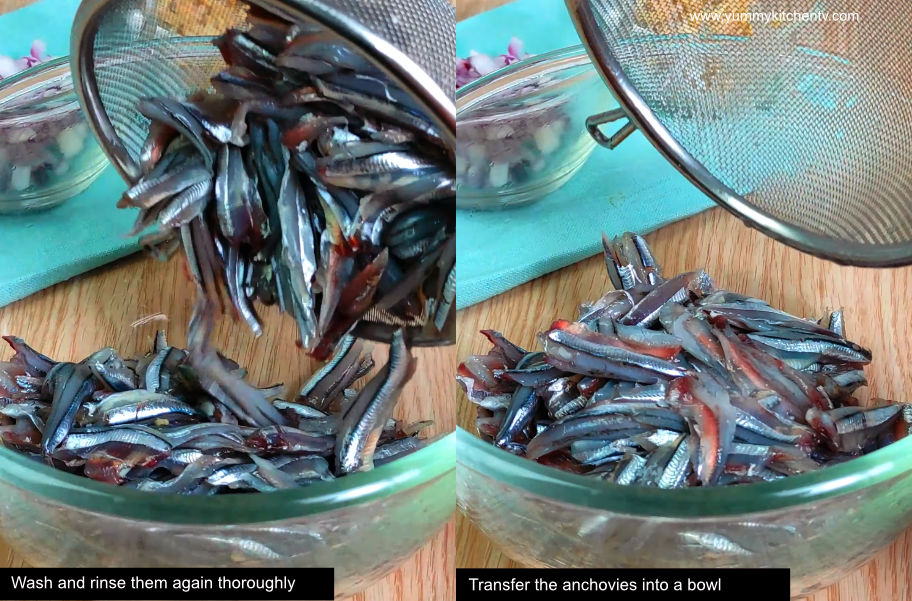
3. Add the minced ginger, onions, chopped red and green chilies, calamansi extract and vinegar. Lastly, season with some salt, pepper and sugar. Mix until well combined.

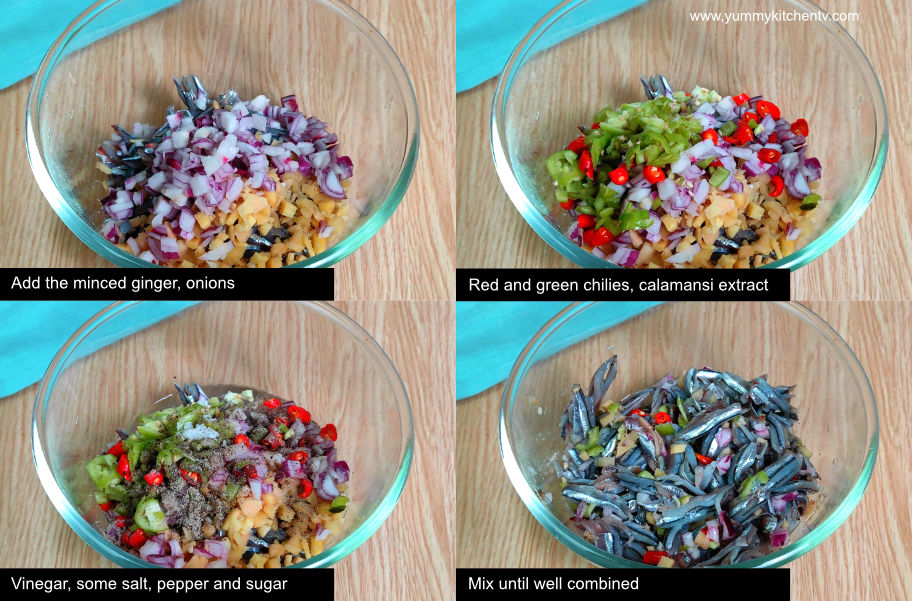
4. Cover the bowl using a plastic wrap and refrigerate for at least 30 minutes.

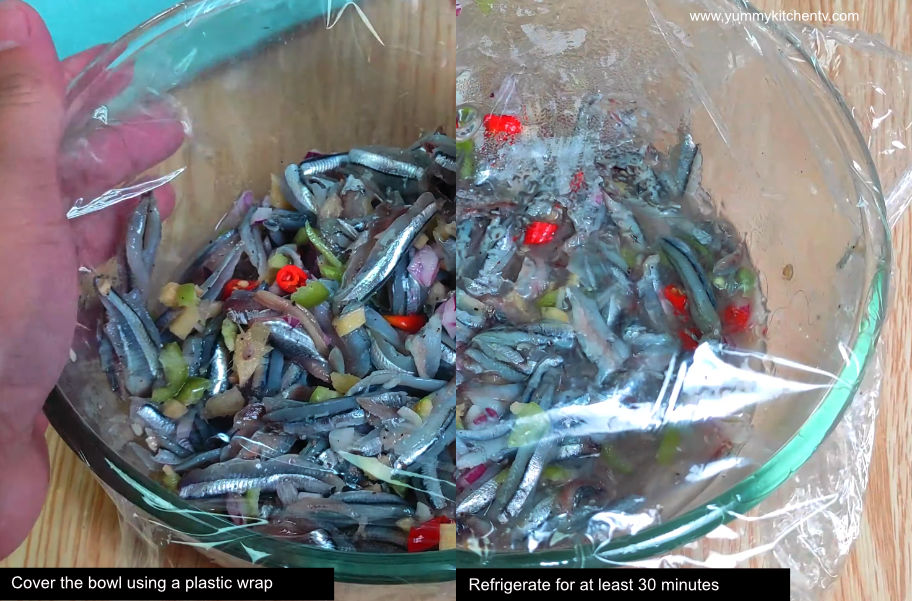
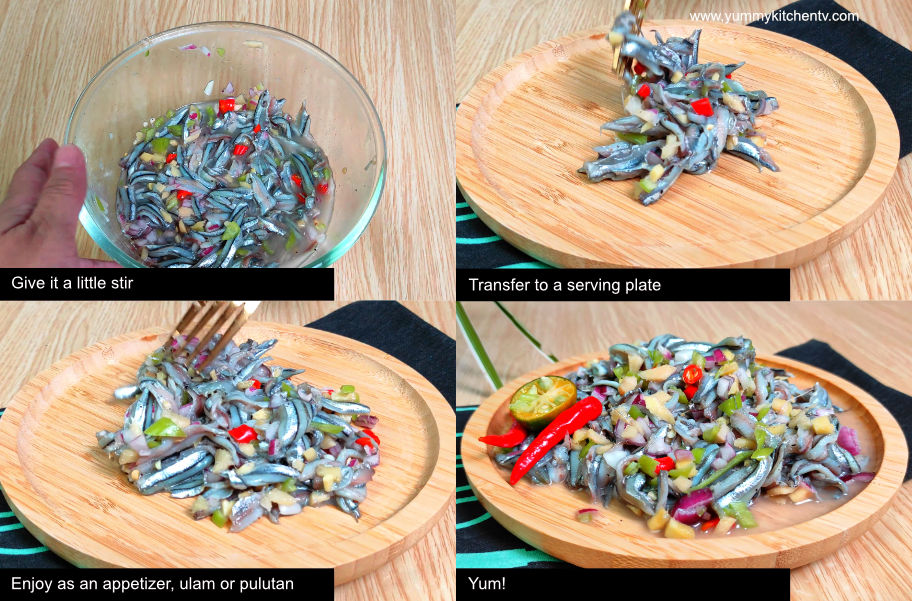
5. Give it a little stir before transferring to a serving plate. Enjoy this as an appetizer, ulam to hot steaming rice or pulutan to an ice cold beer. Yum!

COOKING TIPS
- For kinilaw dishes, white vinegar is always used. But you can also try making this recipe using apple cider vinegar or cane vinegar or rice wine vinegar.
- Control the Heat : If you’re sensitive to spice, remove the seeds from the chilies — the heat mostly resides in the seeds.
- Add Optional Fresh Elements : Try adding tomatoes or cucumbers for color, texture, and additional freshness. It turns the kinilaw into a more balanced salad-like dish.

WHAT IS DILIS?
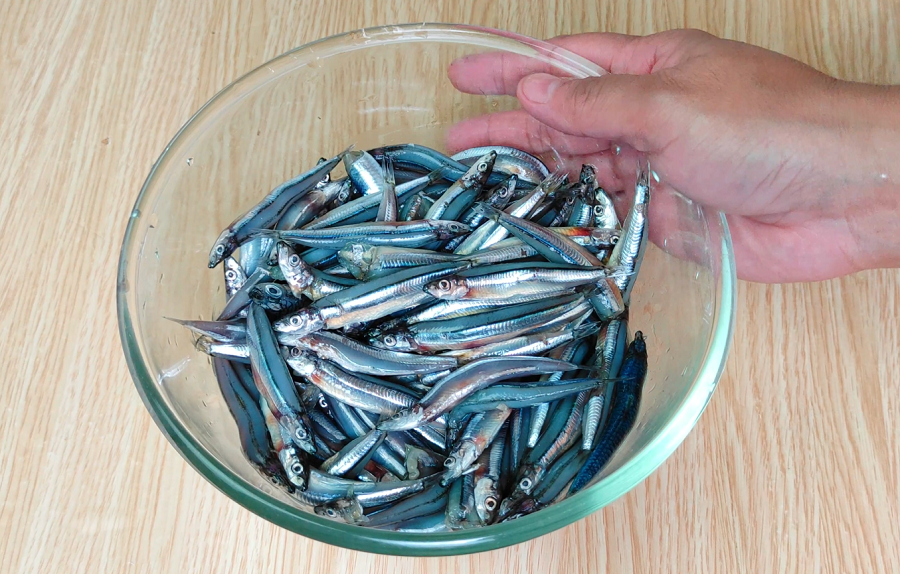
Dilis is the main fish which are used in kinilaw dishes. Did you know what a dilis is?
Dilis, or ‘ Anchovies ‘ in English, is one of the most popular fishes in the market. They belong to a small variety of fish which grows from 2 up to 7 inches. Commonly found in Philippine markets. The 2 inches sized variety is the most common one we see in the Philippine wet market. They are cultivated in marine waters primarily for human consumption. Because of their size and abundant availability, dilis are often one of the most budget-friendly seafood options in Filipino cooking.
There are two common forms you’ll see in stores:
- Fresh dilis: raw anchovies sold for kinilaw, frying, or quick dishes.
- Dried dilis: anchovies that have been sun-dried and sometimes lightly salted — ideal for frying or scooping with rice.
In the culinary world, the term “dilis” usually refers to the processed dilis where the fishes were dried a bit and then coated in red sugar with some salt. This type of snack is sold alongside fried peanuts and beans. Aside from this, the anchovies are also sold as dried fish, where they can be fried and eaten as an ulam or a rice topping. They can also be made into okoy and then fried and dipped in vinegar. There are a lot of dilis recipes out there but the kinilaw na dilis is the best one yet for me.
Why This Dish Is Popular ?
Kinilaw na dilis a number of qualities that make it a perennial favorite in Filipino households:
1. Fresh and Bright Flavor
The combination of vinegar, calamansi, ginger, and chilies creates a refreshing balance of sour, spicy, and savory, making the kinilaw a palate-pleasing dish that’s perfect in hot weather – or any greasy or oily dish to help cut though the oiliness.
2. No Cooking Needed
It’s so easy to make you just need 20 minutes or less to make. You don’t use heat — only acid — which means this dish is quick and easy to make, putting it within reach of home cooks of all skill levels.
3. Social Dish (Pulutan or Appetizer)
Whether served as an appetizer (pulutan) with cold drinks or as a side with rice ( to turn this into a main dish ), kinilaw na dilis is a crowd-pleaser at gatherings and casual meals alike.

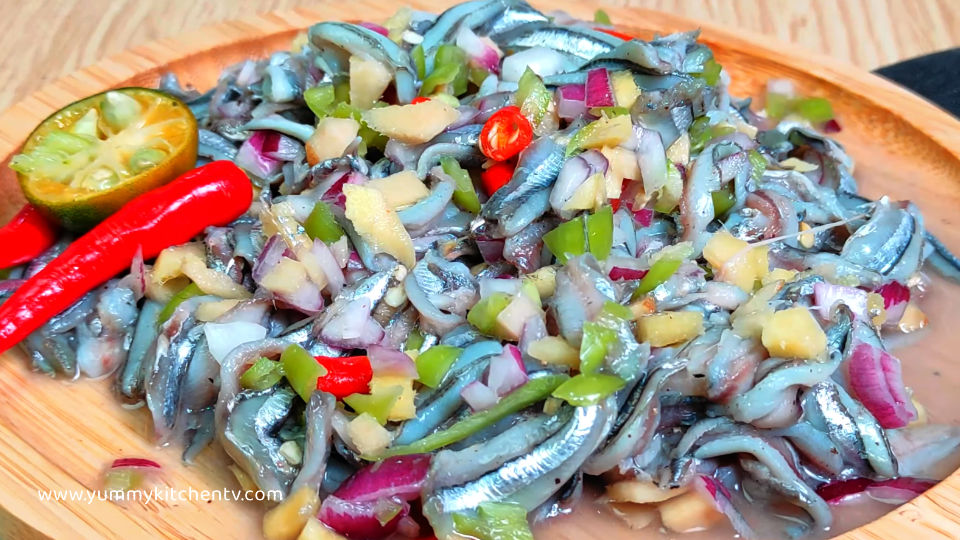
KINILAW NA DILIS
The past week had been very busy for our family as we had 3 almost consecutive celebrations. You know us Pinoys, chances like that, there will be a whole week of kainan and inuman! It is super challenging thinking of different dishes to serve and different pulutans every night. While finger foods such as mani, fries and the like are the usual pulutans we serve, it would be a bit boring serving them peanuts for a whole week!
I have been serving oily and salty foods like sisig for a while. But having them every night is a bit boring and nakakaumay. So to give a twist to the pulutan, I tried something fresh and sour pulutan instead of the usual oily and salty. Kinilaw is the first dish which came into my mind. Since the dilis is the easiest kinilaw to prepare, I went for it! With the freshness and sour seafood taste, the kinilaw na dilis will be an instant hulas once you pair this with any beer or alcohol! This is also a budget friendly pulutan since a kilo of dilis only cost a few peso!
If you wanna know how to make some kinilaw na dilis for your inuman later tonight, read and follow the simple steps below. Happy cooking!

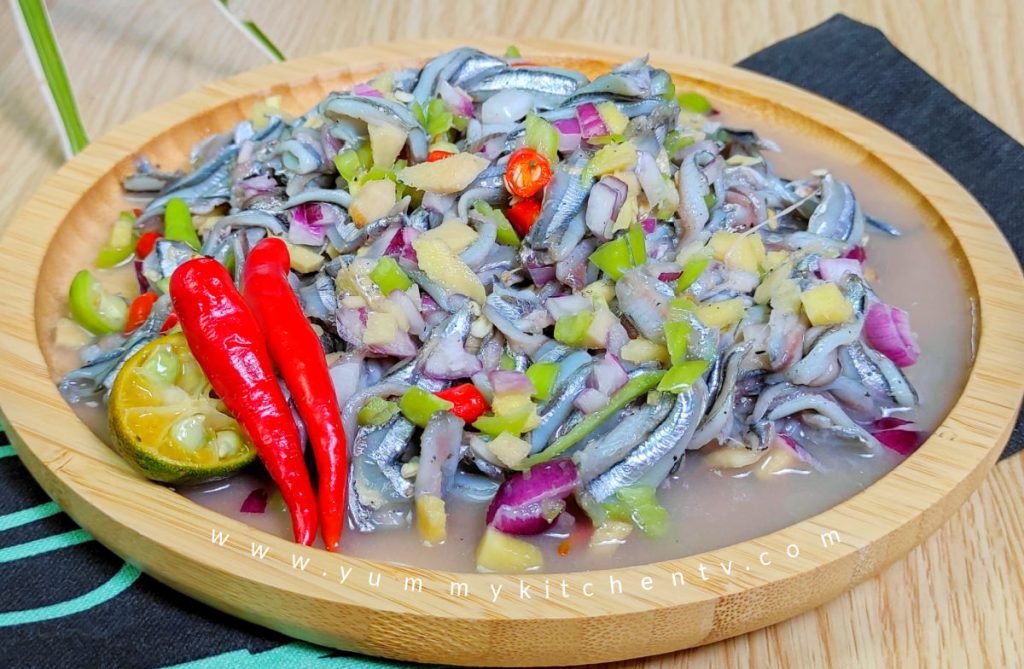
HOW TO MAKE KINILAW NA DILIS
Making a kinilaw dish is super easy because there is literally no cooking needed! Leave your stove and pan behind as we prepare the kinilaw na dilis in our dining table.
Since we are not going to cook anything, it is recommended to prepare all ingredients first before starting with the dish. This is to prevent the fresh ingredients (like the chilies, ginger, onion, etc) on being contaminated.
For the anchovies or the dilis, it is super important that you get the freshest ones. It would be a problem if the anchovies are not fresh and starts to have a bad smell. You can get the good ones usually during the mornings in the wet market.
The dilis, as you know, is a small variety of fish. Since we are not cooking them, it is super super important to clean them thoroughly and very important that you wash your hands thoroughly. We do not want to contaminate the fish! The head must be removed, the innards, the gills, even the bones and tails! Make it to a point that we only need its flesh intact. Since they are small, this step might take you a few minutes especially if you will be dealing with a lot of dilis. You may wash them a few times just to make sure that they are well cleaned.
After all the ingredients have been prepared, simply combine them all in a large bowl. Make sure that you put enough vinegar to cover all the dilis. Cover them with plastic wrap and wait for AT LEAST 30 minutes. After this, you will notice that the flesh of the fish becomes a little whiter than when fresh. The natural acidity of the vinegar “cooks” the fresh flesh of the dilis. Also, you will notice that the vinegar has been reduced a bit, as the dilis absorbs some of them.
As always, do a taste test first before serving.
I usually enjoy my kinilaw na dilis together with some ice cold beer. It is usually a pulutan rather than an ulam but you can still enjoy it with rice. Yum!
Try our other Yummy Fish Recipes :

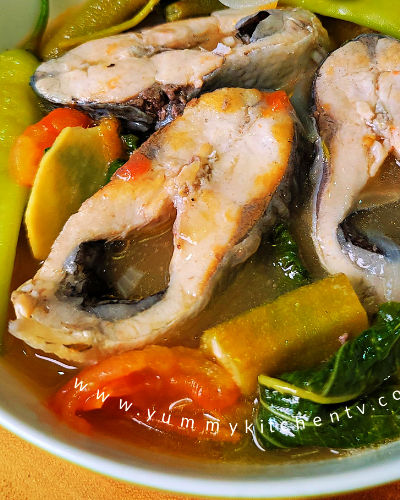

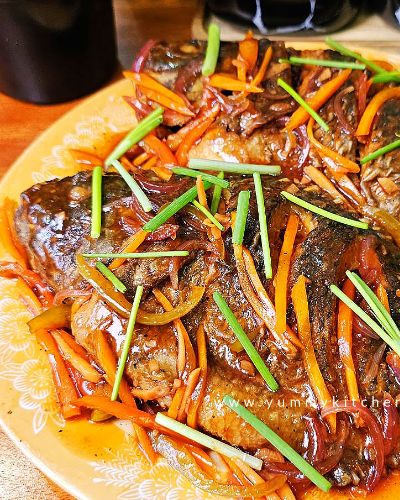

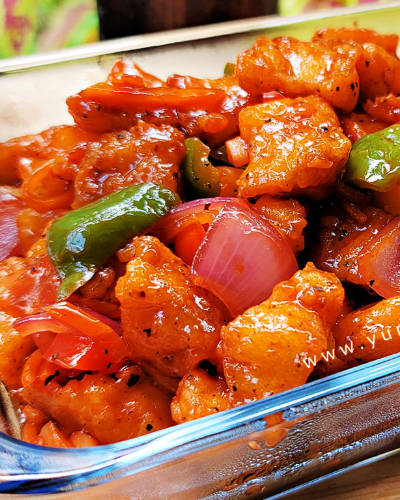
Kinilaw na Dilis Recipe (TAGALOG)
Mga Sangkap:
- 1/2 kilo dilis
- 3 piraso siling haba
- 3 piraso siling labuyo
- 2 luya (hiniwa ng maliliit)
- 1 sibuyas (hiniwa ng maliliit)
- 5 kalamansi (piniga)
- 3 kutsarang suka
- Paminta
- Asin
- Asukal
Paano Lutuin:
- Wash and prepare the anchovies. Gently twist the head and pull the innards. Squeeze the belly of the fish gently to remove the remaining innards and then pull the bone and tail to remove. Do these steps with the rest of the anchovies. Set aside.
- Hugasan at ihanda ang mga dilis.
- Wash and rinse them again thoroughly and then transfer the anchovies into a bowl.
- Add the minced ginger, onions, chopped red and green chilies, calamansi extract and vinegar. Lastly, season with some salt, pepper and sugar. Mix until well combined.
- Cover the bowl using a plastic wrap and refrigerate for at least 30 minutes.
- Give it a little stir before transferring to a serving plate. Enjoy this as an appetizer, ulam to hot steaming rice or pulutan to an ice cold beer. Yum!

Final Thoughts
Kinilaw recipes vary by region. In the Visayas and Mindanao, some versions even incorporate coconut milk (gata) for a creamy twist. No matter the variation, kinilaw remains a cherished Filipino technique that celebrates the country’s seafood bounty and culinary ingenuity. Anchovies (dilis) themselves hold cultural significance — they can be enjoyed fresh, dried, or incorporated into other dishes such as stews and sauces. Their umami depth enriches dishes across Filipino cooking.
This delightful, easy-to-make Filipino classic brings the best of fresh seafood, bold citrus, and aromatic herbs into one dish. Whether served for a casual family dinner, a weekend gathering, or as pulutan with friends, it’s a dish that’s as vibrant in flavor as it is rich in tradition.