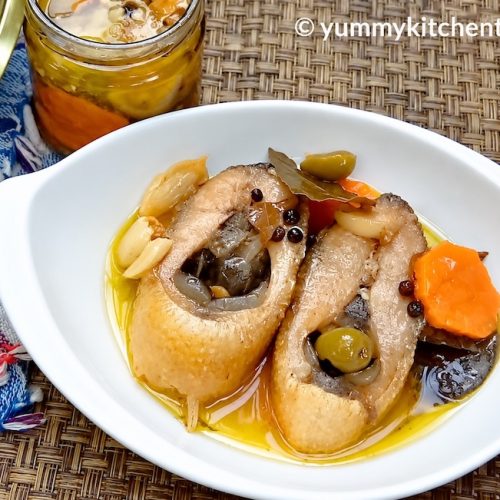
Spanish-Style Bangus Sardines Recipe - Homemade Filipino Milkfish
Homemade Spanish-style bangus sardines made with milkfish, garlic, carrots, bay leaves, green olives, peppercorns and olive oil. This flavorful Filipino fish dish is pressure-cooked until tender and delicious, perfect with warm steamed rice.
Equipment
- Pressure cooker
- Large bowl for brining
- Knife and cutting board
- Measuring cups and spoons
- Tongs or a wide spatula
- Serving plate
Ingredients
For the Fish
- 1 kg sliced milkfish bangus
- 1 carrot sliced
- 1 bulb garlic
- A few bay leaves laurel leaves
- ¼ cup green olives
- 2 cups olive oil
- ½ cup water
- 1 tablespoon whole peppercorns
- 1 tablespoon salt
For the Brine
- 6 cups water
- ¾ cup salt
Instructions
- Prepare the Brine: Combine 6 cups water and ¾ cup salt in a large bowl. Stir until the salt dissolves. Soak the sliced bangus for 30 minutes to help remove blood and reduce unwanted odors.
- Drain the Fish: Remove the bangus from the brine and drain well. Arrange the bay leaves, garlic, and sliced carrots at the bottom of the pressure cooker.
- Arrange the Bangus: Place the fish slices on top of the aromatics, arranging them carefully to help prevent sticking.
- Add the Seasonings: Add the green olives, peppercorns, and salt. Pour in the ½ cup water and olive oil. Make sure the cooker contains the minimum amount of liquid required by its manufacturer, and do not exceed its maximum fill line.
- Pressure-Cook: Secure the lid and cook according to the pressure cooker's instructions and a suitable, tested method for fish. Allow the pressure to release safely before opening the cooker. Cooking time and settings may vary by appliance.
- Serve: Carefully transfer the fish to a serving plate. Arrange the carrots, garlic, olives, and bay leaves around or on top of the bangus. Serve with warm steamed rice.
Notes
- Bay leaves: The original quantity of ¼ cup is unusually large. A few bay leaves are generally enough to flavor the fish.
- Brining: Drain the fish well after soaking. Avoid adding extra salt until you have considered how much salt the fish retained from the brine.
- Olives: Green olives provide a savory, slightly tangy flavor. Pickles can be used as an alternative, though the taste will differ.
- Pressure cooker safety: Follow your appliance's instructions for liquid requirements, fill limits, cooking, and pressure release.
- Storage: This recipe is not a shelf-stable canning method. Refrigerate leftovers promptly in a covered container and consume within 3–4 days, or freeze for longer storage. Do not store it at room temperature in sealed jars; safe shelf-stable fish canning requires a validated pressure-canning process.
Nutrition
Calories: 600kcalCarbohydrates: 5gProtein: 40gFat: 45gSaturated Fat: 8gCholesterol: 120mgFiber: 1gSugar: 2g
Tried this recipe?Let us know how it was!