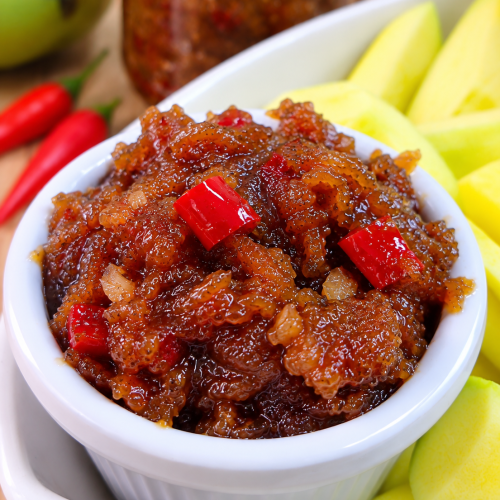
Ginisang Bagoong (Sautéed Shrimp Paste)
A rich, sweet, salty and savory Filipino sautéed shrimp paste made with bagoong alamang, pork fat, garlic, onion, tomatoes, vinegar, brown sugar and optional chili. Perfect for dipping with green mangoes or serving with hot rice.
Equipment
- Large frying pan with lid
- Strainer
- Knife
- Cutting board
- Measuring cups and spoons
- Wooden spoon or spatula
- Clean airtight container
Ingredients
- 2 cups shrimp paste bagoong alamang
- 1 cup pork fat
- 1/2 cup water
- 1 medium onion chopped
- 4 cloves garlic minced
- 2 tomatoes minced
- 1/2 tablespoon ground black pepper
- 1 tablespoon vinegar
- 1 cup brown sugar or more to taste
- 1 chili chopped, optional
Instructions
- Rinse the shrimp paste. Place the shrimp paste in a strainer and carefully rinse with water to remove some of the excess salt. Drain well and set aside.
- Render the pork fat. Heat a large pan over low to medium heat. Add the pork fat and 1/2 cup water. Cover and braise for about 5 minutes.
- Reduce the heat to low and continue cooking for about 10 minutes, or until the pork fat becomes browned and most of the water has evaporated. Carefully remove the lid to avoid hot oil splatters.
- Sauté the aromatics. Push the cooked pork fat to one side of the pan. Add the chopped onion and minced garlic to the rendered fat. Sauté until fragrant and softened.
- Add the tomatoes. Add the minced tomatoes and stir together with the onion and garlic. Cover and cook for about 3 minutes, allowing the tomatoes to soften and release their juices.
- Add the shrimp paste. Add the drained shrimp paste and stir thoroughly until it is well combined with the aromatics and pork fat.
- Season. Add the ground black pepper, vinegar, and brown sugar. Stir well until the sugar dissolves into the mixture.
- Add chili. If you prefer spicy bagoong, add the chopped chili and mix well.
- Simmer. Cover the pan and simmer over low to medium heat for 15–20 minutes. Stir occasionally to prevent the mixture from sticking or burning.
- Finish. Continue cooking until the bagoong becomes thicker and the sugar has caramelized slightly. Taste and adjust the sweetness, acidity, or seasoning according to your preference.
- Cool and store. Turn off the heat and allow the bagoong to cool slightly before transferring it to a clean, airtight container.
Notes
Nutrition
Calories: 210kcalCarbohydrates: 20gProtein: 5gFat: 13gSodium: 1000mgFiber: 1gSugar: 17g
Tried this recipe?Let us know how it was!